Motorized Retractable Screen Enclosure Cost Patio USA Guide
Motorized Retractable Screen Enclosure Cost for Patio USA
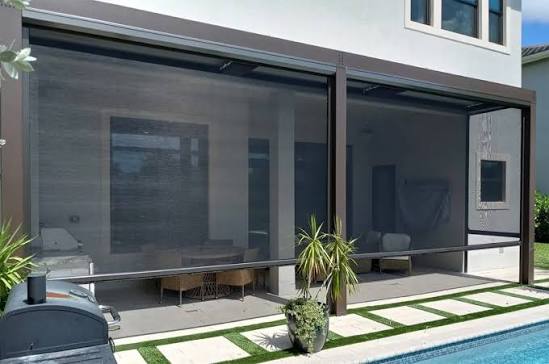
A motorized retractable screen enclosure is an increasingly popular architectural upgrade for American homes, offering the flexibility to transform an open patio into a protected, semi-enclosed outdoor room at the press of a button. Unlike fixed screen cages or permanent sunrooms, retractable power screens store neatly inside discrete extruded aluminum housings when not in use. This preserves unobstructed backyard views and natural sunlight while deploying on demand to block insects, filter harsh solar glare, reduce wind, or provide privacy.
Navigating a Motorized retractable screen enclosure cost for patio USA project requires analyzing system components, custom opening dimensions, specialized mesh materials, drive motor technologies, and electrical integration. Across the United States, installed pricing generally ranges from $20 to $75+ per square foot, translating to $3,000 to $6,000+ per individual opening or $8,000 to $25,000+ for a complete multi-sided patio enclosure. This comprehensive guide breaks down system tiers, material variations, practical installation scenarios, budgeting frameworks, and long-term care guidelines to help property owners plan effectively.
Overview of Motorized Retractable Screen Enclosure Cost for Patio USA
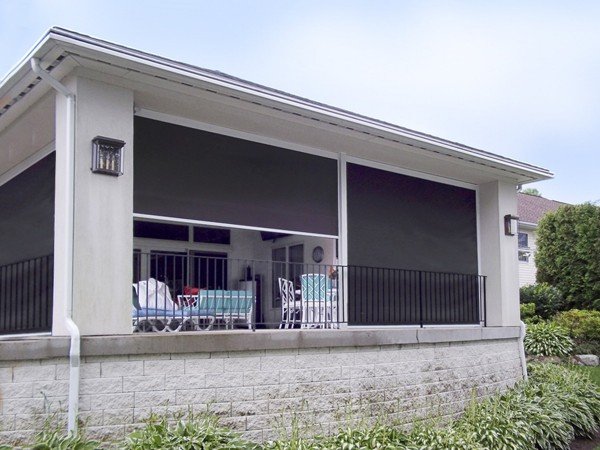
Understanding the Motorized retractable screen enclosure cost for patio USA landscape requires evaluating a specialized assembly rather than simple screen fabric. A high-quality motorized screen system consists of five primary engineered components: a powder-coated aluminum protective head cassette, an internal motorized drive roller tube, side retention tracks with floating zipper or magnetic tensioning systems, a weighted bottom hem bar, and specialty exterior-grade mesh fabric.
                MOTORIZED RETRACTABLE SCREEN ASSEMBLY

      +---------------------------------------------------------+
      | Extruded Aluminum Cassette (Housing & Motor Tube)        |
      +---------------------------------------------------------+
      |  [=====] Exterior Polyester/Vinyl Mesh Fabric [=====]   |
      |   |                                               |     |
      |   | Side Retention Track                         |     |  <-- Zipper / Magnetic
      |   | (Prevents Blowout)                            |     |      Track Retention
      |   v                                               v     |
      +---------------------------------------------------------+
      | Weighted Bottom Hem Bar & Flexible Dust Seal Strip      |
      +---------------------------------------------------------+
Across the US market, system costs vary depending on whether screens are retrofitted onto an existing covered porch, integrated into a wooden or aluminum pergola, or built into new luxury construction with recessed housings. While a basic single-opening screen over a small patio doorway represents a modest investment, enclosing a three-sided, 300-square-foot outdoor living room with wind-rated tracks and smart home automation requires a substantial capital budget. Property owners invest in power screens to extend their seasonal patio usability, protect high-end outdoor furniture from atmospheric dirt, and reduce indoor cooling loads by shading exterior windows.
Key System Categories and Material Variations
When evaluating a Motorized retractable screen enclosure cost for patio USA project, system pricing is heavily governed by the functional purpose of the mesh fabric, cassette concealment style, and track retention technology.
| Category / Type | Material & Feature Description | Primary Use Case | Time / Cost / Effort Level |
| Insect Control Mesh System | High-visibility PVC-coated polyester or fiberglass mesh (18×14 or 20×20 weave) maximizing airflow. | Covered porches and patios seeking maximum bug defense and ventilation. |
Cost: $3,000–$5,000 / opening Total: $8,000–$15,000 (3 openings) Effort: Moderate |
| Solar Shading Mesh System | Micro-woven synthetic solar fabric blocking 80% to 97% of UV radiation and solar heat gain. | West-facing patios, sunny lanais, and homes seeking glare reduction and energy efficiency. |
Cost: $3,500–$6,000 / opening Total: $10,000–$18,000 (3 openings) Effort: Moderate |
| Privacy & Dual-Purpose System | Dense solar or dual-colored weaves that allow outward views during the day while blocking inward lines of sight. | Suburban backyards in high-density communities requiring privacy around hot tubs or seating. |
Cost: $4,000–$6,500 / opening Total: $12,000–$20,000 (3 openings) Effort: Moderate-High |
| Clear Vinyl Weather Screen | Heavy-duty, optical-grade clear marine vinyl panels combined with reinforced edge fabric. | Converting open patios into three-season rooms shielded from winter wind and rain. |
Cost: $4,500–$7,500 / opening Total: $13,500–$22,000 (3 openings) Effort: High (requires thermal expansion care) |
| High-Wind / Hurricane-Rated System | Reinforced tracks (e.g., MagnaTrack or zip-lock technology) with high-tensile aramid/Kevlar mesh. | Coastal zones (Florida, Gulf Coast, Carolinas) subject to severe storms and high winds. |
Cost: $5,000–$8,500+ / opening Total: $15,000–$28,000+ (3 openings) Effort: Very High (engineering required) |
Selecting the Right Category
Choosing between system types depends on primary outdoor goals, regional climate demands, and structural orientation. Homeowners prioritizing airflow and pest protection in humid regions (such as the Southeast or Midwest) typically select standard insect mesh. Properties in arid, sunny climates (such as the Southwest or California) benefit most from 90% to 95% solar shading fabrics to lower surface temperatures on outdoor stone pavers. Coastal homes facing high wind loads require track systems capable of absorbing heavy wind deflection without tearing mesh edges out of side guides.
Practical Installation Scenarios Across US Homes
Scenario 1: Retrofit Bug Screen Package on Existing Covered Porch (250 sq. ft.)
-
Context: A suburban home in Georgia with a 12×20 foot covered rear porch with two open sides and a rear access opening.
-
Component List:
-
Surface-mounted powder-coated aluminum cassettes (10-foot and 12-foot spans)
-
Surface-mounted zipper side retention tracks attached to existing timber posts
-
Standard 80% insect mesh in dark charcoal
-
Somfy or Gaposa RTS radio-frequency tubular motors with multi-channel handheld remote
-
Hardwired 120V electrical connection installed by a licensed electrician
-
-
Relevance: Demonstrates a straightforward residential retrofit where surface-mounted housings attach directly to existing structural posts, keeping total installed costs around $9,000 to $14,000 for three openings.
Scenario 2: Solar Shading Package for West-Facing Paver Patio & Pergola (300 sq. ft.)
-
Context: A residence in Phoenix, Arizona, with a 15×20 foot aluminum pergola experiencing intense afternoon heat and UV glare.
-
Component List:
-
Color-matched extruded cassettes integrated under the pergola beam line
-
95% solar block exterior synthetic fabric in bronze/saddle tone
-
Obstacle-detection smart motors that reverse auto-direction if patio furniture blocks screen descent
-
Automated wind and sun sensors that deploy screens when ambient UV rises and retract them in high winds
-
-
Relevance: Illustrates automated climate control that turns a hot patio into a shaded outdoor space, with multi-screen solar packages averaging $12,000 to $19,000 installed.
Scenario 3: Recessed Luxury New Construction Build with Smart Integration (400 sq. ft.)
-
Context: A new luxury home build in Texas featuring an expansive covered lanai with 16-foot wide openings.
-
Component List:
-
Flush-mounted recessed head cassettes hidden inside ceiling soffits
-
Recessed side tracks embedded into natural stone columns
-
Heavy-duty magnetic tensioning tracks (e.g., MagnaTrack system)
-
High-tensile solar/insect dual mesh
-
Smart home hub integration (Control4, Lutron, or Crestron) allowing app and voice control
-
-
Relevance: Represents a high-end architectural installation where concealed housings and wide spans require structural framing coordination during early home design, with budgets spanning $22,000 to $40,000+.
                 SCENARIO SCOPE & COMPLEXITY MATRIX

      Retrofit Porch (Scenario 1)          Solar Pergola (Scenario 2)           Recessed Luxury Build (Scenario 3)
      +----------------------------+      +---------------------------------+  +---------------------------------+
      | Surface-Mounted Housings   |      | Color-Matched Pergola Mount     |  | Flush Recessed Ceilings/Columns |
      | Standard Insect Mesh       |      | 95% Solar Block Fabric          |  | High-Wind Magnetic Tracks       |
      | Handheld Remote Control    |      | Wind & Sun Auto Sensors         |  | Full Smart Home Integration     |
      | $9,000 – $14,000 Total     |      | $12,000 – $19,000 Total         |  | $22,000 – $40,000+ Total        |
      +----------------------------+      +---------------------------------+  +---------------------------------+
Comparison of Scenarios
Scenario 1 offers the most accessible path by installing surface-mounted components onto existing porch posts. Scenario 2 incorporates environmental automation—such as wind sensors—to protect investment materials from storm damage. Scenario 3 represents the highest level of architectural finish, where early builder coordination hides all mechanical cassettes inside structural ceilings.
Planning, Cost, or Resource Considerations
Accurately estimating the Motorized retractable screen enclosure cost for patio USA landscape requires breaking down line items into raw material hardware, specialized mesh, drive motors, licensed electrical trades, and factory-certified labor. Electrical supply work alone generally adds $300 to $1,200 per project, depending on the distance from the main circuit panel to the patio location.
       TYPICAL INSTALLED COST RANGES PER OPENING (USA)

  Standard Insect Screen (Up to 12 ft wide)
  [Screen & Motor $2,000-$3,500] + [Install & Elec $1,000-$1,500]  --->  $3,000 - $5,000 Total

  Solar / Privacy Screen (Up to 16 ft wide)
  [Screen & Motor $2,500-$4,200] + [Install & Elec $1,000-$1,800]  --->  $3,500 - $6,000 Total

  High-Wind / Wide Span / Recessed System (18+ ft wide)
  [Screen & Motor $3,800-$6,500] + [Install & Elec $1,200-$2,000]  --->  $5,000 - $8,500+ Total
Sample Project Budget Model (3-Opening Patio Enclosure, US National Averages)
| Cost Category | Basic Insect Package | Solar & Privacy Package | High-Wind / Recessed Package | Financial & Operational Notes |
| Screen Housings & Tracks | $4,500 – $6,500 | $6,000 – $8,500 | $9,000 – $14,000 | Powder-coated aluminum cassettes, side tracks, and weighted bottom bars. |
| Mesh Fabric Material | $1,200 – $2,000 | $2,000 – $3,500 | $3,500 – $6,000 | Standard bug mesh vs. 95% solar block vs. high-tensile aramid storm fabric. |
| Tubular Motors & Electronics | $1,500 – $2,400 | $2,100 – $3,200 | $3,000 – $4,800 | Internal motors, RF receivers, remotes, and smart home hubs. |
| Electrical Trade Wiring | $400 – $800 | $600 – $1,000 | $800 – $1,500 | Licensed electrician fees for dedicated 120V circuits and conduit. |
| Professional Trade Labor | $1,800 – $2,800 | $2,200 – $3,500 | $3,200 – $5,200 | Factory-certified installer team for mounting, track alignment, and limits. |
| Estimated Total Installed | $9,400 – $14,500 | $12,900 – $19,700 | $19,500 – $31,500+ | National installed averages for a complete 3-opening enclosure (~300 sq. ft.). |
Engineering Strategies, Motor Systems, and Controls
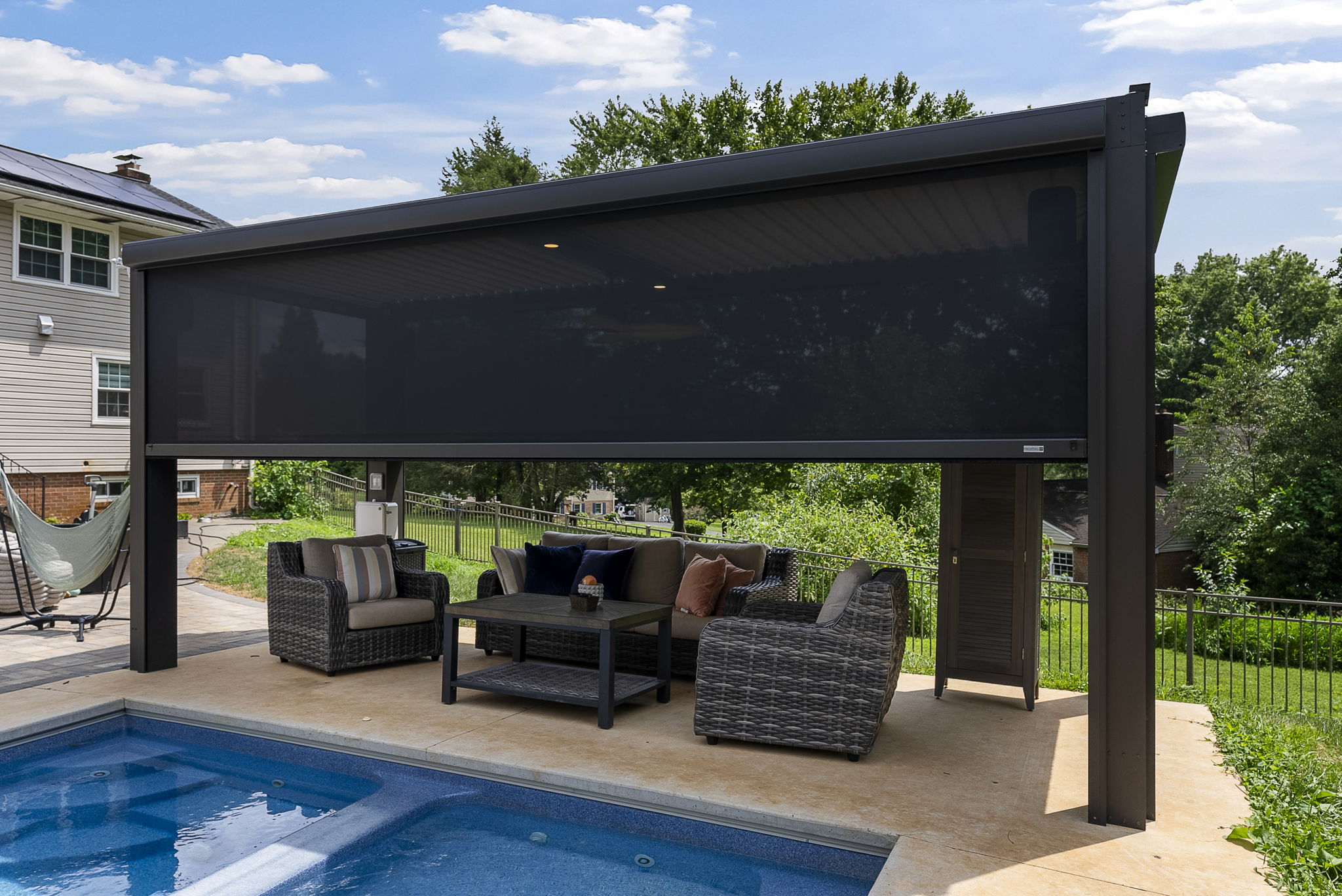
Selecting the correct drive motor technology and side retention track mechanics is critical to long-term reliability and resistance to wind blowouts.
1. Zipper Track vs. Magnetic Track Retention Mechanics
-
Description: Side tracks hold the fabric edges in place as the screen deploys and retracts.
-
Performance Differences:
-
Zipper Systems: Use a welded continuous zipper bead along mesh edges that slides inside a PVC track insert. Provides an airtight, bug-proof seal but can bind under heavy transverse wind pressure.
-
Magnetic Systems (e.g., MagnaTrack): Utilize rare-earth neodymium magnets inside side tracks to hold mesh tension. Allows internal tracks to flex under sudden wind gusts and auto-re-engage without jamming or tearing fabric.
-
2. Obstacle Detection Motor Technology
-
Description: Advanced tubular motors (such as Somfy Maestro or Progressive obstacle-detection series) that monitor torque during screen descent.
-
Advantages: Automatically stops and reverses screen direction if the bottom hem bar hits a patio chair, grill, or pet, preventing fabric bunching and motor burn-out.
-
Disadvantages: Adds $150 to $300 per motor compared to standard single-directional drive motors.
                  SIDE TRACK RETENTION DYNAMICS

        Standard Zipper Track System            Magnetic Tension Track System
      +------------------------------+        +------------------------------+
      | Rigid PVC Guide Insert       |        | Floating Internal Track      |
      | Welded Continuous Edge Zip   |        | Neodymium Magnet Tensioning   |
      | Complete Airtight Bug Seal   |        | Flexes Under Gusts & Auto-Self|
      | (Can Jam Under High Gusts)   |        | Corrects Alignment           |
      +------------------------------+        +------------------------------+
3. Automated Environmental Sensor Networks
-
Description: Pairing power screens with wireless wind, sun, and rain sensors.
-
Advantages: Automatically retracts screens when wind speeds exceed safe operating thresholds (typically 25–35 mph) and deploys solar screens when direct sunlight hits patio openings.
-
Disadvantages: Adds $300 to $700 in sensor hardware and programming costs.
Risks, Hazards, and Common Installation Mistakes
Motorized screen installations require precise mechanical squareness and clean electrical supplies to avoid premature component failure.
+------------------------------------------------------------------------+
|                     RISK & FAILURE MITIGATION MATRIX                   |
+------------------------------------------------------------------------+
| ISSUE / RISK       | ROOT CAUSE               | PREVENTION & MITIGATION|
+--------------------+--------------------------+------------------------+
| Fabric Wrinkling   | Cassette housing or side | Shimming tracks to     |
| & Telescoping      | tracks mounted out of    | perfect plumb and level|
|                    | plumb or square.         | within 1/16 inch.      |
+--------------------+--------------------------+------------------------+
| Wind Blowout &     | Operating screens in high| Retract screens during |
| Track Dislodgement | wind without wind-rated  | high winds; install    |
|                    | magnetic/zip tracks [1.1.3].| wind sensors [1.1.1].  |
+--------------------+--------------------------+------------------------+
| Motor Failure &    | Connecting motors to     | Require licensed trade |
| Voltage Spikes     | ungrounded or fluctuating| electricians for clean |
|                    | power sources [1.1.1].   | dedicated 120V lines [1.1.1].|
+--------------------+--------------------------+------------------------+
| Interior Fabric    | Using interior-grade shade| Specify exterior-grade |
| Degradation        | fabric containing        | polyester/vinyl mesh   |
|                    | fiberglass outdoors [1.1.4].| with UV inhibitors [1.1.4].|
+------------------------------------------------------------------------+
Ongoing Maintenance and Long-Term Management
While motorized retractable screens require less maintenance than fixed screen enclosures—because mesh is stored protected from UV exposure when retracted—routine care extends system lifespan.
                   SYSTEM MAINTENANCE TIMELINE

  Installation     Bi-Annual Clean        Annual Track Check     Year 5 - 10
  [Limits Set] -> [Wash Mesh & Tracks] -> [Inspect Side Guides] -> [Battery / Remote Check]
       |                  |                    |                      |
  Program Motor   Mild Soap Wash &     Clear Track Debris     Replace Remote Batteries
  Travel Stops    Hose Down Fabric     Apply Silicone Spray   Check Motor Wiring
Recommended Maintenance Protocols
-
Seasonal Fabric Washing (Bi-Annually): Lower screens completely and wash mesh with warm water, mild dish soap, and a soft microfiber brush. Hose off salt, pollen, and dirt. Allow fabric to dry completely before retracting into cassette housings to prevent mold growth.
-
Side Track Lubrication (Annually): Clean dirt, dead insects, and debris out of side retention tracks using a vacuum or stiff brush. Spray track channels with dry silicone lubricant—never petroleum-based grease, which attracts dirt and gums up zipper tracks.
-
Winterization Guidelines: In freezing northern climates, ensure screen fabric is completely dry before retracting for winter storage. Avoid operating motor units when ice or snow accumulation freezes the bottom hem bar to patio stone.
-
Remote and Limit Verification: Check multi-channel remote batteries annually. If a screen stops short of the patio floor or over-rotates inside the head cassette, re-program motor upper and lower limit switches using the manufacturer controller sequence.
Project Documentation and Outcome Tracking
Maintaining accurate construction records helps homeowners protect manufacturer warranties (which often span 5 to 10 years on motors and 10 to 15 years on fabrics), simplify future trade service, and document home improvements for resale value.
                 PROJECT DOCUMENTATION DOSSIER

  +-------------------------------------------------------------+
  |  1. Detailed Itemized Installer Quote & Contract            |
  |  2. Mesh Material Data Sheets & Solar Block % Certificate    |
  |  3. Motor Model Numbers & Electronic Remote Limit Codes     |
  |  4. Electrical Trade Permit & Circuit Wiring Diagram        |
  |  5. Manufacturer Warranty Certificates (Motors & Fabric)    |
  +-------------------------------------------------------------+
Practical Documentation Examples
Example 1: Home Resale Valuation Proof
A homeowner installs a $16,000 three-sided motorized solar screen package on their covered patio. They compile contractor tax invoices, factory warranty certificates, and smart home hub integration guides into a digital home folder. When listing the property for sale, the real estate agent presents this documentation to demonstrate a turnkey outdoor living upgrade, justifying a higher home appraisal value.
Example 2: Motor Warranty Replacement
Seven years after installation, a patio screen motor experiences an internal circuit failure. The homeowner retrieves their archived documentation dossier, specifying the original Somfy motor serial code and factory purchase invoice. The installer submits the claim to the manufacturer, providing a replacement drive motor under the 10-year warranty without administrative delay.
Closing Summary
Evaluating a Motorized retractable screen enclosure cost for patio USA project involves balancing initial capital investment against outdoor usability, pest defense, and solar heat control. Installed systems average $3,000 to $6,000 per opening or $8,000 to $25,000+ for complete multi-sided patio enclosures, governed by custom opening dimensions, specialized mesh fabrics, motor automation, and track engineering. By selecting wind-rated retention tracks, exterior-grade synthetic mesh, obstacle-detection motors, and certified trade installers, American homeowners create a flexible outdoor room built for long-term comfort.
Frequently Asked Questions (FAQ)
How much does a motorized retractable screen enclosure cost per opening in the USA?
A single motorized retractable patio screen typically costs between $3,000 and $6,000 installed for a standard residential opening (roughly 10 to 15 feet wide). Wide spans, specialized solar fabrics, or recessed housings can push single-opening costs to $5,000–$8,500+.
How do motorized retractable screens handle high winds?
High-quality motorized screen systems feature continuous side retention tracks (such as zipper or magnetic MagnaTrack systems) that lock fabric edges inside aluminum channels. Systems equipped with magnetic tension tracks can withstand wind gusts up to 45–75+ mph by flexing to absorb pressure without tearing fabric or dislodging from tracks.
How long do motorized retractable screens last?
The extruded aluminum housings and tracks last 20+ years, exterior-grade synthetic mesh fabrics typically last 10 to 15+ years, and electric drive motors carry manufacturer lifespans of 8 to 12+ years. Retracting screens inside cassettes when not in use protects materials from UV degradation, significantly extending overall lifespan compared to fixed screen enclosures.