Block Paving vs Resin Bound Driveway Cost per m² UK
Block Paving vs. Resin Bound Driveway Cost per Square Metre in the UK
Upgrading a residential driveway is one of the most effective ways to boost kerb appeal, improve off-street parking functionality, and add long-term value to a property in the United Kingdom. When evaluating surfacing materials, UK homeowners and property developers frequently compare traditional block paving with modern resin bound systems. Both surfacing options provide durable, visually attractive finishes, but they differ significantly in material composition, ground preparation requirements, SuDS (Sustainable Drainage Systems) compliance, and total installation costs per square metre.
Analyzing a Block paving vs resin bound driveway cost per square metre UK comparison requires examining raw material prices, ground excavation needs, sub-base requirements, specialized labor rates, and long-term maintenance costs. While block paving offers modular design versatility and localized repairability, resin bound surfacing delivers a smooth, seamless, permeable finish that can often be laid directly over existing stable bases. This comprehensive guide provides a neutral breakdown of installation costs, technical specifications, practical application scenarios, and long-term maintenance requirements across both driveways.
Overview of Block Paving vs Resin Bound Driveway Cost per Square Metre UK

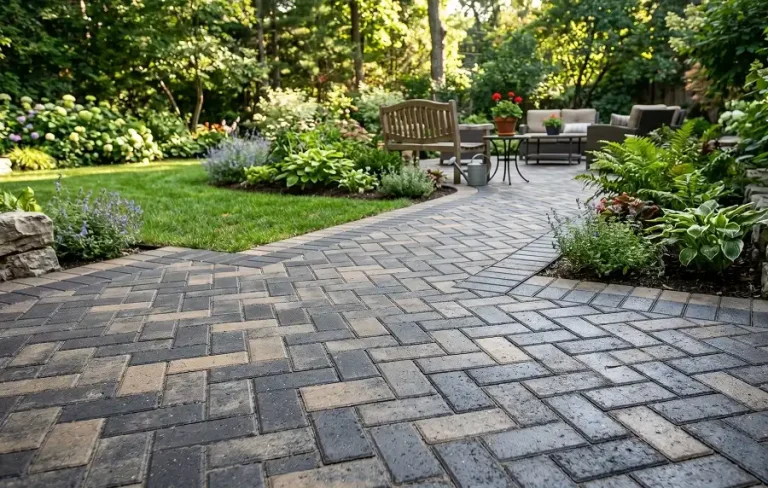
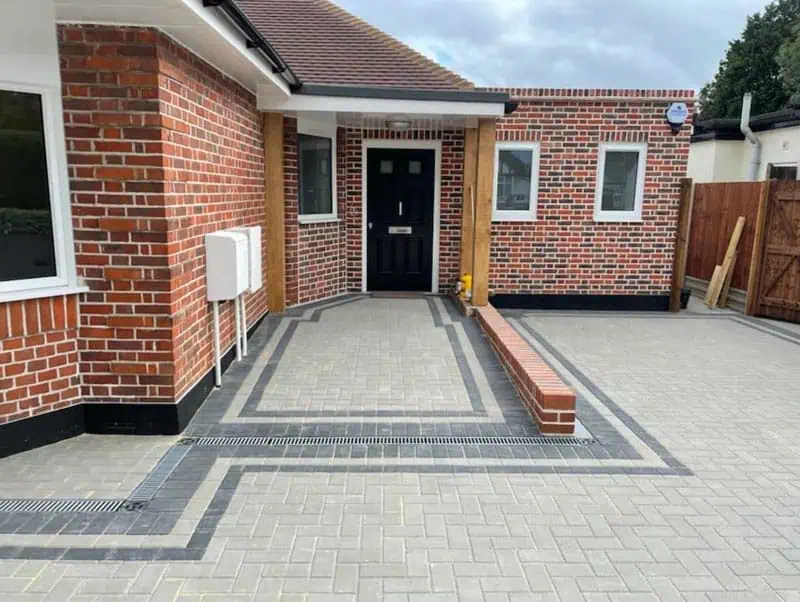
Understanding a Block paving vs resin bound driveway cost per square metre UK evaluation begins with recognizing the fundamental structural and chemical differences between modular unit paving and poured resin-aggregate mixtures. Block paving relies on individual concrete, clay, or natural stone blocks laid in interlocking patterns (such as herringbone or stretcher bond) over a compacted sand and sub-base layer. Because each block is individually placed, labor intensity is high, but the resulting flexible surface resists point-load deformation and allows single blocks to be lifted for utility access or repairs.
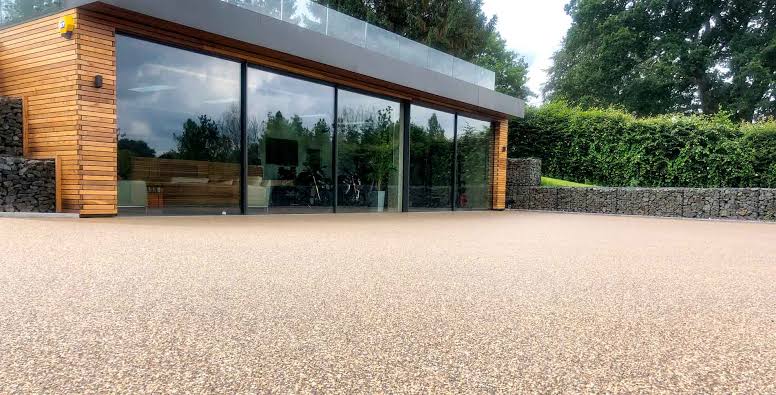
Resin bound surfacing consists of natural aggregate stones thoroughly coated in a clear polyurethane resin binder and troweled smooth over a permeable or solid sub-base (typically asphalt or concrete). The resulting matrix creates a continuous, porous layer that complies with UK Sustainable Drainage Systems (SuDS) regulations without requiring separate planning permission, provided the sub-base is also permeable. Evaluating Block paving vs resin bound driveway cost per square metre UK requires balancing initial installation costs—which typically range from £60 to £120 per m² for resin bound and £70 to £130 per m² for block paving—against ground preparation demands and long-term maintenance needs.
                 STRUCTURAL & DRAINAGE COMPARISON

      [ Block Paving System ]                [ Resin Bound System ]
   +---------------------------+          +---------------------------+
   | Interlocking Concrete/Clay|          | Resin-Aggregate Matrix    |
   | Sand-Filled Joints        |          | Smooth Porous Surface     |
   | Screeded Sand Bedding     |          | Open-Graded Asphalt Base  |
   | Type 1 MOT Sub-Base       |          | Type 1 MOT Sub-Base       |
   +---------------------------+          +---------------------------+
                 |                                      |
   Requires SuDS Drainage Channels           Naturally SuDS Compliant
     (Aco Drains / Soakaways)                  (Water Infiltrates)
Key Categories, Material Options, and Approaches
When comparing a Block paving vs resin bound driveway cost per square metre UK project, both surfacing types branch into specific sub-categories and installation routes that directly dictate project complexity and cost.
| Category / Type | Description | Common Use Case | Time / Cost / Effort Level |
| Standard Concrete Block Paving | Molded concrete blocks available in 50mm to 80mm thicknesses in various colors and interlocking shapes. | Standard UK suburban driveways and parking pads. |
Total Installed Cost: £70–£100 / m² Labor Effort: High (individual hand-laying) |
| Clay & Natural Stone Block Paving | High-density kiln-fired clay bricks or natural granite/sandstone pavers with colorfast finishes. | Period properties, heritage conservation areas, and luxury driveways. |
Total Installed Cost: £90–£130+ / m² Labor Effort: High (precise cuts and handling) |
| Permeable Block Paving (PBP) | Specially engineered blocks with enlarged joint nibs filled with coarse aggregate to allow SuDS drainage. | Properties requiring SuDS compliance without secondary drainage channels. |
Total Installed Cost: £80–£115 / m² Labor Effort: High (specialized aggregate jointing) |
| Resin Bound Overlay (Over Concrete/Asphalt) | Resin and stone aggregate troweled directly over a clean, structurally sound existing drive (15mm–18mm depth). | Refurbishing existing concrete or asphalt drives without full excavation. |
Total Installed Cost: £50–£80 / m² Labor Effort: Moderate (quick installation window) |
| Resin Bound Full Excavation | Complete excavation, sub-base installation, open-graded asphalt binder course, and 18mm UV-stable resin top layer. | New driveway installations or replacing degraded, unstable surfaces. |
Total Installed Cost: £85–£130 / m² Labor Effort: High (heavy machinery + skilled troweling) |
How to Choose Between Categories
Selecting between these categories depends primarily on the condition of the existing driveway base, SuDS drainage requirements, and property aesthetics. Where a structurally sound, non-cracked asphalt or concrete base already exists, a resin bound overlay offers the most cost-effective route by bypassing excavation fees. When building a completely new driveway from ground level, standard or clay block paving provides long-term structural flexibility, while full-depth resin bound systems deliver a sleek, weed-resistant, seamless surface.
Practical Scenarios or Thematic Applications
Scenario 1: Suburban Retrofit Overlay on Existing Asphalt (50 m²)
-
Context: A homeowner in the Midlands with an intact, non-cracked 50m² asphalt driveway seeking a modern aesthetic upgrade without major ground excavation.
-
Component List:
-
High-pressure surface jet washing and primer coat application
-
Aluminum border edging installed around perimeter lines
-
UV-stable polyurethane clear resin mixed with dried natural quartz stone aggregate
-
Hand-troweled application at an 18mm thickness
-
-
Relevance: Highlights how resin bound overlays minimize waste disposal, ground disturbance, and total project costs when a stable sub-base is already present.
Scenario 2: Full Excavation Block Paving for Period Property (60 m²)
-
Context: A Victorian home in Southern England requiring a traditional clay brick driveway replacement with integrated surface water management.
-
Component List:
-
Excavation to 250mm depth and muck-away waste disposal
-
Geotextile membrane and 150mm compacted MOT Type 1 aggregate base
-
Aco channel drains connected to a soakaway to meet SuDS standards
-
50mm clay block pavers laid in a 45-degree herringbone pattern with kiln-dried sand joints
-
-
Relevance: Demonstrates a complete ground-up block paving installation where heavy earthwork and drainage infrastructure represent a significant portion of the total budget.
Scenario 3: Permeable Resin Bound System for New Build Driveway (80 m²)
-
Context: A new-build home in Northern England requiring a fully SuDS-compliant, multi-car driveway with smooth access for wheelchairs and strollers.
-
Component List:
-
200mm excavation and non-woven geotextile membrane
-
150mm Type 3 open-graded aggregate sub-base (free-draining)
-
50mm open-graded asphalt binder course layer
-
18mm UV-stable resin bound stone mix troweled to a smooth finish
-
-
Relevance: Illustrates how a fully permeable resin system eliminates the need for surface water gullies or soakaway connections while maintaining full UK planning compliance.
                 SCENARIO ENGINEERING & COST PROFILE

     Resin Overlay (Scenario 1)          Full Block Paving (Scenario 2)
   +----------------------------+      +----------------------------+
   | Uses Existing Base         |      | Full 250mm Earth Excavation|
   | Fast Installation (1-2 days)|     | Extensive Drainage Channel |
   | Lower Waste Disposal Fees  |      | Hand-Laid Modular Units    |
   | £50 - £80 / m² Total       |      | £90 - £130 / m² Total      |
   +----------------------------+      +----------------------------+
Comparison of Scenarios
Scenario 1 achieves the lowest price per square metre by utilizing existing base materials, making it ideal for homeowners refurbishing stable driveways. Scenario 2 represents a traditional, labor-intensive brick driveway replacement that offers high curb appeal and individual unit repairability. Scenario 3 focuses on modern SuDS compliance, using specialized open-graded base layers to ensure continuous permeability across the entire surface.
Planning, Cost, or Resource Considerations
Accurately evaluating the Block paving vs resin bound driveway cost per square metre UK requires breaking down expenditure into excavation, sub-base materials, surface products, specialized labor, and waste removal (muck-away). Regional labor differences also impact quotes; installation rates in London and South East England typically run 15% to 30% higher than in Northern England, Wales, or Scotland.
       TYPICAL INSTALLED COST RANGES PER SQUARE METRE (UK)

  Resin Bound Overlay (On Existing Base)
  [Materials £25-£40] + [Labor £25-£40]     --->  £50 - £80 / m² Total

  Concrete Block Paving (Full Dig-out)
  [Materials £20-£50] + [Labor £50-£80]     --->  £70 - £130 / m² Total

  Resin Bound System (Full Dig-out & Base)
  [Materials £35-£55] + [Labor £50-£75]     --->  £85 - £130 / m² Total
Sample Project Budget Model (50 m² Driveway, UK Average)
| Category | Standard Concrete Block Paving | Full Resin Bound System | Explanation & Optimization Tips |
| Excavation & Muck-Away | £1,000 – £1,800 | £1,000 – £1,800 | Grab hire or skip removal for soil and old paving (approx. 10–15 tonnes). |
| Sub-Base & Aggregates | £600 – £1,000 | £1,200 – £2,000 | MOT Type 1 for block paving vs. Type 3 stone + open-graded asphalt for resin. |
| Edging & Restraints | £400 – £700 | £300 – £600 | Concrete key kerbs for blocks vs. aluminum/pin kerb strips for resin. |
| Surface Materials | £1,000 – £2,200 | £1,500 – £2,800 | Concrete/clay blocks + joint sand vs. dried aggregate bags + UV resin kits. |
| Drainage Infrastructure | £300 – £800 | £0 – £300 | Aco drains and soakaway for blocks vs. natural permeability for resin. |
| Installation Labor | £1,800 – £3,000 | £1,500 – £2,500 | Skilled block layers (3–5 days) vs. resin trowel crew (1–2 days). |
| Estimated Total Installed | £5,100 – £9,500 | £5,500 – £10,000 | Figures are national averages (~£100–£190/m² total all-in including base prep). |
Strategies, Tools, or Support Options
Sustaining a high-quality driveway installation requires selecting the right structural engineering strategy and specialized equipment for the chosen material.
1. UV-Stable Polyurethane Resin Formulation
-
Description: Utilizing aliphatic (UV-stable) polyurethane binders rather than non-UV aromatic resins for stone aggregate bonding.
-
Advantages: Prevents ambering, yellowing, or darkening under direct sunlight; preserves original stone aggregate color.
-
Disadvantages: Costs 20% to 35% more in material expenses compared to non-UV aromatic resins.
2. Kiln-Dried Joint Sand Kiln Sealing for Block Paving
-
Description: Sweeping silica jointing sand into block gaps, followed by a penetrating acrylic sealer application.
-
Advantages: Locks sand in place, prevents weed germination, and reduces oil stain penetration into porous concrete blocks.
-
Disadvantages: Requires complete surface drying before application; must be re-applied every 3 to 5 years.
                 DRIVEWAY JOINT & BINDER STRATEGIES

      Block Paving Joint Sand                 Resin Bound Matrix
    +------------------------+             +------------------------+
    | [Block] Sand [Block]   |             |  (Stone) Resin (Stone) |
    | Interlocking Friction  |             |  Porous Bound Matrix   |
    | Needs Periodic Sweep   |             |  No Loose Joints/Sand  |
    +------------------------+             +------------------------+
3. Forced-Action Forced Mixer Equipment (Resin Systems)
-
Description: Using a specialized forced-action paddle mixer (such as a Baron or SoRoTo mixer) rather than a standard cement mixer to blend aggregate and resin.
-
Advantages: Ensures 100% coat coverage on every stone granule, preventing localized binder failure or surface pot-holing.
-
Disadvantages: Requires specialized hired equipment and fast, continuous crew operation due to resin curing times.
4. Permeable Sub-Base Design (SuDS Compliance)
-
Description: Building sub-bases with open-graded aggregates (MOT Type 3) that contain zero fine dust, allowing water storage and slow soil infiltration.
-
Advantages: Meets UK planning permission exemption rules for driveways exceeding 5 square metres.
-
Disadvantages: Type 3 stone aggregate is slightly less universally available and more costly than standard MOT Type 1.
Safety, Risks, or Common Challenges
Failing to adhere to UK building standards or material installation parameters can cause early structural degradation, surface reflective cracking, or drainage failures.
+------------------------------------------------------------------------+
|                     RISK & FAILURE MITIGATION MATRIX                   |
+------------------------------------------------------------------------+
| ISSUE / RISK       | ROOT CAUSE               | PREVENTION & MITIGATION|
+--------------------+--------------------------+------------------------+
| Reflective Surface | Resin overlay applied    | Fill movement joints   |
| Cracking           | directly over cracking   | with flexible polymer; |
|                    | concrete or movement base| install fiberglass mesh|
|                    | seams.                   | over base cracks.      |
+--------------------+--------------------------+------------------------+
| Block Edge         | Missing or inadequate    | Lay concrete key kerbs |
| Spreading          | concrete edge restraint  | in a haunched concrete |
|                    | haunching. | bed along borders.|
+--------------------+--------------------------+------------------------+
| Resin Surface      | Moisture contact during  | Only lay resin during  |
| Clouding / Foaming | troweling or rain before | dry weather with ground|
|                    | cure completion.| moisture < 8%.         |
+--------------------+--------------------------+------------------------+
| Weed Infiltration  | Airborne seeds settling  | Regular power sweeping |
| & Moss Growth      | in sand joints or resin  | and application of     |
|                    | surface pores.  | non-acidic weed wash.|
+------------------------------------------------------------------------+
Maintenance, Best Practices, or Long-Term Management
Ongoing upkeep requirements vary significantly when comparing a Block paving vs resin bound driveway cost per square metre UK decision.
                   10-YEAR MAINTENANCE TIMELINE

  Block Paving Driveway:
  Year 1       Year 2 - 3         Year 5 - 6         Year 8 - 10
  [Initial] -> [Joint Sand Sweep]-> [Power Wash/Reseal]-> [Block Resetting]
  (Requires ongoing weed control, joint topping, and periodic power washing)

  Resin Bound Driveway:
  Year 1       Year 2 - 3         Year 5 - 6         Year 8 - 10
  [Initial] -> [Light Wash] -----> [Jet Wash Clean] -> [Check Edges]
  (Requires periodic fan-jet washing; no joint sand re-application needed)
Recommended Maintenance Protocols
For Block Paving Driveways:
-
Joint Sand Replenishment (Annual): Sweep fresh kiln-dried sand into block joints after heavy rains or jet washing to maintain interlocking friction.
-
Weed Management (Quarterly): Treat joint sand with a weed inhibitor to prevent seed germination in windblown organic dust.
-
Selective Unit Replacement: If individual blocks become oil-stained or chipped, extract the damaged units, adjust bedding sand, and insert matching replacement blocks.
For Resin Bound Driveways:
-
Routine Pressure Washing (Bi-Annually): Wash the surface with a wide-angle fan lance (maximum 150 bar) to dislodge fine silt from open aggregate pores.
-
Spill Cleanup: Clean vehicle oil leaks immediately using warm water and household detergent to prevent binder softening.
-
Heavy Load Management: Avoid parking heavy goods vehicles or using narrow point-load hydraulic jacks directly on the resin surface without protective wooden spreader plates.
Project Documentation & Outcome Tracking
Maintaining accurate project records helps UK property owners demonstrate SuDS compliance, support insurance claims, and preserve property value during home sales.
                 PROJECT DOCUMENTATION DOSSIER

  +-------------------------------------------------------------+
  |  1. Contractor Contract & Detailed Scope of Work            |
  |  2. Aggregate & Resin Technical Data Sheets (UV Rating)     |
  |  3. SuDS Compliance Certificates & Drainage Self-Declaration|
  |  4. Sub-Base Aggregate Weight Tickets & Muck-Away Receipts  |
  |  5. 10-Year Workmanship & Material Guarantee Documents     |
  +-------------------------------------------------------------+
Illustrative Documentation Examples
Example 1: SuDS Compliance Verification
A property owner installs an 80m² resin bound driveway in a regulated suburban borough. They archive the contractor’s aggregate delivery tickets specifying Type 3 open-graded stone, open-graded asphalt invoices, and a SuDS self-certification form. During a home sale, this documentation satisfies the buyer’s solicitor regarding local UK planning compliance.
Example 2: Block Paving Material Archive
A homeowner installs a clay block paving driveway using a multi-tonal brick blend. They retain the original manufacturer product codes, color numbers, and 10 left-over spare blocks. Five years later, when underground water pipe repairs require lifting a section of paving, the plumber re-installs the original blocks seamlessly without color mismatching.
Closing Summary
Evaluating the Block paving vs resin bound driveway cost per square metre UK comparison involves balancing upfront installation costs against long-term maintenance preferences and existing site conditions. Resin bound overlays provide an attractive, budget-conscious, SuDS-compliant option (£50–£80/m²) when installed over stable existing bases, while complete resin excavations (£85–£130/m²) deliver a smooth, low-maintenance, weed-resistant surface. Block paving (£70–£130/m²) requires higher ongoing joint maintenance but offers modular design flexibility, timeless aesthetic appeal, and individual block replacement over a 25 to 30+ year lifespan.
Frequently Asked Questions (FAQ)
Which is cheaper per square metre in the UK, block paving or resin bound?
When installing over an existing, structurally sound concrete or asphalt base, a resin bound overlay is generally cheaper (£50–£80 per m²). However, if both systems require full ground excavation down to sub-grade level, standard concrete block paving (£70–£110 per m²) and full resin bound installations (£85–£130 per m²) carry comparable overall installed costs.
Do resin bound driveways require planning permission in the UK?
Resin bound driveways generally do not require planning permission in the UK because their porous stone-and-resin matrix allows surface water to drain directly through into the ground, making them naturally SuDS compliant. However, this exemption relies on the underlying sub-base layer (such as open-graded asphalt or Type 3 stone) also being permeable.
Can weeds grow through resin bound driveways compared to block paving?
Weeds cannot grow up through a properly installed resin bound driveway because the continuous resin-stone matrix forms a solid, seamless barrier. In contrast, block paving driveways feature sand-filled joints where windblown seeds can settle and germinate over time unless regularly maintained or sealed.