Interlocking Stone Patio Installation Cost Canada (2026 Guide)
Interlocking Stone Patio Installation Cost in Canada
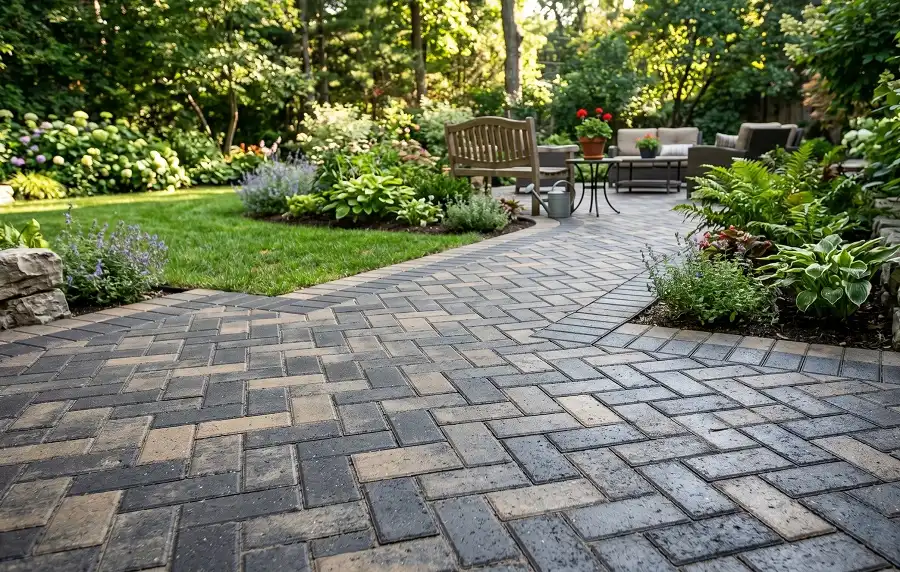
Installing an interlocking stone patio is one of the most durable and visually appealing ways to enhance a outdoor living space in Canadian residential properties. Unlike continuous poured concrete slabs, which are prone to severe cracking during winter freeze-thaw cycles, interlocking stone paver systems create a flexible surface capable of accommodating subtle ground movement. However, because proper installation requires deep excavation, compacted aggregate base preparation, and specialized labor, evaluating overall project budgets requires a clear understanding of material tiers and regional construction demands.
Understanding the Interlocking stone patio installation cost Canada homeowners navigate involves analyzing material expenses, excavation volume, site accessibility, drainage requirements, and local labor rates. Across Canadian provinces, professionally installed paver patios generally range from $17 to $45+ CAD per square foot, with total project budgets varying significantly based on stone choice and landscape complexity. This educational guide breaks down paver categories, practical installation scenarios, cost estimation models, and long-term maintenance practices to help property owners plan effectively.
Overview of Interlocking Stone Patio Installation Cost in Canada
Evaluating Interlocking stone patio installation cost Canada figures requires looking beneath the surface layer to understand the complete structural assembly. In Canada’s varied climate—where winter frost penetrates deep into the soil—a paver patio functions as an engineered system. It consists of compacted native subgrade soil, a geotextile separation membrane, 6 to 12 inches of compacted dense-graded aggregate base (Granular A / 0-3/4 inch crushed stone), 1 inch of screeded concrete bedding sand or chip stone, and interlocking pavers locked together with polymeric joint sand.
                     INTERLOCKING PAVER PATIO CROSS-SECTION

      [ Surface Layer ]    Interlocking Pavers (50mm - 60mm thick)
      === (Open Joints) === Polymer-Modified Joint Sand (Activated) =============
      [ Bedding Layer ]    1" Screeded Washed Concrete Sand or #8 Chip Stone
      --------------------------------------------------------------------------
      [ Sub-Base Layer ]   6" - 12" Compacted Granular A / Crushed Stone Base
      ~~~~~~~~~~~~~~~~~~~~~~~~~~~~~~~~~~~~~~~~~~~~~~~~~~~~~~~~~~~~~~~~~~~~~~~~~~
      [ Filter Layer ]     Non-Woven Geotextile Membrane
      ~~~~~~~~~~~~~~~~~~~~~~~~~~~~~~~~~~~~~~~~~~~~~~~~~~~~~~~~~~~~~~~~~~~~~~~~~~
      [ Subgrade Soil ]    Excavated & Compacted Native Soil (Graded to Slope)
The primary objective of this layered assembly is to distribute surface loads evenly while allowing meltwater to drain away from home foundations. For standard residential patios, raw material costs (pavers, gravel, sand, and edge restraints) account for roughly 25% to 40% of the total quote, while site excavation, soil disposal, base compaction, and skilled labor make up the remaining 60% to 75%. Factors such as narrow backyard access, heavy clay soils, steep slopes, and intricate cutting patterns directly influence the overall labor hours required per square foot.
Key Paver Categories and Material Variations
When evaluating Interlocking stone patio installation cost Canada metrics, material selection represents one of the largest variables in total project expenditure. Manufacturers across Canada (such as Unilock, Techo-Bloc, Permacon, and Best Way Stone) offer several distinct paver categories tailored to different aesthetic and performance requirements.
| Category / Type | Material Description | Common Use Case | Time / Cost / Effort Level |
| Standard Concrete Pavers | High-density precast concrete units available in smooth or tumbled finishes and standard shapes. | Suburban residential backyards, dining pads, and simple walkways. |
Material: $4–$10 CAD / sq. ft. Installed: $17–$28 CAD / sq. ft. Effort: Moderate |
| Architectural Slab Pavers | Large-format precast concrete slabs mimicking natural stone or wood planks with protective surface coatings. | Modern architectural patios, large pool decks, and open entertainment zones. |
Material: $8–$18 CAD / sq. ft. Installed: $22–$35 CAD / sq. ft. Effort: High (heavy slab handling) |
| Clay Brick Pavers | Kiln-fired natural clay bricks offering permanent colorfast red and earth tones. | Historic homes, cottage gardens, and traditional brick walkways. |
Material: $6–$14 CAD / sq. ft. Installed: $20–$32 CAD / sq. ft. Effort: Moderate-High |
| Natural Stone Pavers (Limestone/Granite) | Quarried natural stone cut to uniform thicknesses or irregular flagstone slabs. | Premium custom estate terraces, luxury pool surrounds, and rustic courtyards. |
Material: $12–$25+ CAD / sq. ft. Installed: $28–$45+ CAD / sq. ft. Effort: Very High (variable sizing) |
| Porcelain Outdoor Slabs | Non-porous, ultra-dense vitrified ceramic slabs engineered for zero water absorption and stain resistance. | Modern minimalist patios, covered outdoor rooms, and poolside surrounds. |
Material: $8–$20 CAD / sq. ft. Installed: $25–$45 CAD / sq. ft. Effort: High (requires specialized wet saws) |
How to Choose Between Material Options
Selecting a paver material involves balancing visual preferences, local climate conditions, maintenance willingness, and budget limits. Standard concrete pavers provide the most cost-effective option for general residential backyards. Natural stone offers unmatched authenticity and long lifespan, but demands higher upfront capital and careful stone selection. Outdoor porcelain slabs excel in stain resistance and contemporary appeal, but require a pristine, non-settling aggregate base to prevent slab cracking under point loads.
Practical Installation Scenarios across Canadian Regions
Scenario 1: Standard Suburban Backyard Replacement (300 sq. ft.)
-
Context: A flat suburban backyard in Southern Ontario or Greater Montreal replacing a worn lawn with a 300 sq. ft. concrete paver dining patio.
-
Component List:
-
Machine excavation to an 8-inch total depth (soil removal via disposal bin)
-
Geotextile filter fabric membrane lining
-
6 inches of compacted Granular A crushed stone base
-
1 inch of screeded concrete bedding sand
-
Standard 60mm multi-piece concrete pavers (e.g., Unilock Beacon Hill or Techo-Bloc Blu 60)
-
Heavy-duty PVC edge restraints secured with 10-inch steel spikes
-
Polymeric joint sand activated with water misting
-
-
Relevance: Demonstrates a baseline residential installation with direct 3-foot wide gate access for mini-excavators, keeping total installed costs near national baseline averages ($18 to $25 CAD per sq. ft.).
Scenario 2: Sloped Backyard with Retaining Wall & Steps (400 sq. ft.)
-
Context: A sloping backyard in Calgary, Edmonton, or Vancouver requiring site grading, a low retaining wall, and integrated steps.
-
Component List:
-
Deep excavation and terraced cut-and-fill earthmoving
-
25 linear feet of precast segmental retaining wall (3 feet high) with crushed stone backfill and weeping tile
-
Two 4-foot-wide precast paver step units
-
8 to 10 inches of compacted open-graded or dense aggregate base
-
Architectural concrete slabs with contrasting border accents
-
-
Relevance: Highlights how vertical masonry, earth retention, steps, and heavy grading elevate structural labor and material inputs ($30 to $50+ CAD per sq. ft. all-in).
Scenario 3: Urban Infill Patio with Restricted Access (200 sq. ft.)
-
Context: A compact townhouse courtyard in downtown Toronto, Ottawa, or Vancouver with no side yard gate access.
-
Component List:
-
Hand excavation and soil transit via wheelbarrows through a garage or narrow alleyway
-
8-inch aggregate base manually placed and compacted
-
Natural limestone or porcelain paver slabs
-
Polymeric joint sand and aluminum edge restraints
-
-
Relevance: Illustrates how restricted site access adds $3 to $8+ CAD per square foot in manual labor transport costs, regardless of the surface paver chosen.
                 SCENARIO ENGINEERING & COST PROFILE

      Suburban Replacement (300 sq ft)      Sloped Site + Retaining Wall (400 sq ft)
      +---------------------------------+  +---------------------------------------+
      | Direct Machine Gate Access      |  | Terraced Cut-and-Fill Earthmoving     |
      | Standard 6" Base Depth          |  | Segmental Retaining Wall & Steps      |
      | Standard Concrete Pavers        |  | Deep 8"-10" Aggregate Base            |
      | $18 - $25 / sq. ft. Total       |  | $30 - $50+ / sq. ft. Total            |
      +---------------------------------+  +---------------------------------------+
Comparison of Scenarios
Scenario 1 benefits from flat ground and machine access, allowing trade crews to maximize daily output. Scenario 2 incorporates civil earth-retention structures, making retaining wall engineering a primary cost driver. Scenario 3 demonstrates that access barriers—rather than surface stone selection—can drive unit labor costs higher on urban footprints.
Planning, Budgeting, and Cost Considerations
Accurately evaluating the Interlocking stone patio installation cost Canada landscape requires breaking down line items into site preparation, aggregate volume, surface units, edge hardware, and trade labor. Professional contractor labor across Canada generally ranges from $10 to $22 CAD per square foot for standard flat installations, rising higher for intricate cutting or restricted access.
       TYPICAL INSTALLED PRICE RANGES PER SQ. FT. (CAD)

  Standard Concrete Pavers
  [Materials $4-$10] + [Base & Labor $13-$18]   --->  $17 - $28 / sq. ft. Total

  Natural Stone or Porcelain
  [Materials $10-$25] + [Base & Labor $15-$25]  --->  $25 - $45+ / sq. ft. Total
Sample Project Budget Model (300 sq. ft. Patio, Canadian CAD Averages)
| Cost Category | Entry-Level Concrete Pavers | Mid-Tier Architectural Slabs | Premium Natural Stone | Explanation & Optimization Notes |
| Excavation & Disposal | $800 – $1,400 | $1,000 – $1,800 | $1,200 – $2,200 | Soil excavation (6″–10″ deep), disposal bin rental, and dumping fees. |
| Sub-Base & Sand | $600 – $1,000 | $800 – $1,300 | $900 – $1,500 | Granular A crushed stone, geotextile fabric, and bedding sand. |
| Paver Materials | $1,500 – $2,700 | $2,700 – $4,800 | $3,900 – $7,200 | Raw paver units including a 10% allowance for edge cuts and waste. |
| Edging & Polymeric Sand | $300 – $500 | $350 – $600 | $400 – $700 | PVC edge restraints, steel spikes, and polymer joint sand. |
| Trade Labor | $3,000 – $5,400 | $3,600 – $6,600 | $4,500 – $8,400 | Base compaction, screeding, laying, diamond cutting, and finishing. |
| Estimated Total Installed | $6,200 – $11,000 | $8,450 – $15,100 | $10,900 – $20,000 | National averages (~$20.50–$36.60/sq.ft. range depending on specs). |
Note: The figures listed above represent general baseline estimates in Canadian Dollars (CAD). Actual project pricing varies according to regional labor rates, municipal permits, site accessibility, soil conditions, and fuel/freight costs.
Installation Strategies, Equipment, and Support Options
Achieving a flat, long-lasting interlocking stone surface requires specialized civil construction strategies and mechanical equipment.
1. Reversible Mechanical Plate Compaction Strategy
-
Description: Utilizing heavy vibratory plate compactors (4,000–7,000 lbf) to consolidate crushed stone sub-bases in lifts no thicker than 2 to 3 inches.
-
Advantages: Eliminates subsurface air voids, prevents future wheel/foot rutting, and locks pavers together once joint sand is applied.
-
Disadvantages: Requires heavy machinery transportation and can scratch delicate slab surfaces if protective rubber mats are omitted during final compaction.
2. Geotextile Soil Separation Membrane
-
Description: Laying non-woven geotextile fabric directly over native subgrade soil before placing aggregate base gravel.
-
Advantages: Prevents native clay or silt from migrating upward into clean aggregate base rock, maintaining base strength in wet spring thaws.
-
Disadvantages: Adds $0.40 to $0.80 CAD per square foot in material expenses.
           SUB-BASE STABILIZATION STRATEGIES

     Standard Aggregate Base           Geotextile Reinforced Base
   +---------------------------+     +---------------------------+
   | Pavers & Bedding Sand     |     | Pavers & Bedding Sand     |
   |---------------------------|     |---------------------------|
   | Loose Aggregate Base      |     | Compacted Aggregate Base  |
   |...........................|     |===========================| <--- Geotextile Fabric
   | Native Soil (Clay Rise)   |     | Subgrade Native Soil      |
   +---------------------------+     +---------------------------+
3. Open-Graded Aggregate Base (HPB / #78 Stone System)
-
Description: Replacing traditional dense Granular A and bedding sand with High-Performance Bedding (HPB) or clean 1/4-inch crushed washed stone.
-
Advantages: Self-compacting (requires minimal mechanical tamping), free-draining, and reduces frost-heave risk.
-
Disadvantages: Requires strict edge restraint containment to prevent side washout.
4. Polymeric Joint Sand Activation
-
Description: Sweeping refined sand infused with polymer binders into paver joints, removing surface dust, and misting with water.
-
Advantages: Hardens into a flexible joint matrix that resists weed germination, insect burrowing, and rain erosion.
-
Disadvantages: Requires completely dry pavers during sweeping; improper watering leaves white polymer haze on stone surfaces.
Safety Factors, Freeze-Thaw Risks, and Structural Challenges
Canadian winters present severe freeze-thaw cycles that test landscape construction. Recognizing common structural risks prevents premature patio failure.
+------------------------------------------------------------------------+
|                     RISK & FAILURE MITIGATION MATRIX                   |
+------------------------------------------------------------------------+
| ISSUE / FAILURE    | ROOT CAUSE               | PREVENTION & FIX       |
+--------------------+--------------------------+------------------------+
| Frost Heaving &    | Insufficient base depth  | Excavate 8"-12" in clay|
| Unlevel Pavers     | or poor drainage trapping| soil; install non-woven|
|                    | water in base layers [1.1.1].| geotextile fabric [1.1.1].|
+--------------------+--------------------------+------------------------+
| Water Pooling Near | Inadequate slope grading | Maintain a minimum 2%  |
| House Foundation   | toward home foundations  | slope (1/4" per foot)  |
|                    | [1.1.1, 1.2.1].          | away from walls [1.1.1].|
+--------------------+--------------------------+------------------------+
| Polymeric Haze     | Misting water while dry  | Blow off fine dust with|
| Surface Staining   | polymer dust remains on  | a leaf blower prior to |
|                    | paver surfaces [1.1.1].  | water activation [1.1.1].|
+--------------------+--------------------------+------------------------+
| Lateral Edge       | Missing or inadequately  | Spike PVC edge rails   |
| Spreading          | spiked perimeter edge    | into compacted base    |
|                    | restraints [1.1.1].      | every 12-18" [1.1.1].  |
+------------------------------------------------------------------------+
Maintenance, Best Practices, and Long-Term Management
While interlocking stone offers long lifespans (25 to 50+ years), regular care preserves visual appeal and joint integrity.
                    PATIO MAINTENANCE LIFECYCLE

  Installation    Year 1 - 2         Year 3 - 5         Year 6 - 8
  [Initial Set] -> [Joint Check] --> [Deep Cleaning] -> [Sealer Topcoat]
       |                |                  |                  |
  Polymeric Sand  Top-off Sand      Power Wash &     Apply Penetrating or
   Activation       if Needed         Weed Check       Acrylic Sealer
Ongoing Maintenance Protocols
-
Seasonal Sweeping (Spring / Fall): Sweep away organic leaf litter, pine needles, and dirt to prevent surface tannin staining.
-
Joint Sand Inspection (Every 2–3 Years): Inspect joints for erosion or cracking. Re-apply polymeric sand in areas where joint depth has dropped below 1/4 inch.
-
Pressure Washing Guidelines: Clean pavers using a wide-angle pressure washer nozzle (2,000–2,500 PSI). Keep the wand nozzle angled away from joints to avoid dislodging polymeric sand.
-
De-Icing Safety in Canadian Winters: Avoid harsh sodium chloride (rock salt) on concrete pavers less than one year old. Use clean sand or calcium magnesium acetate (CMA) products for winter traction to prevent surface scaling.
Documentation, Reporting, and Warranty Tracking
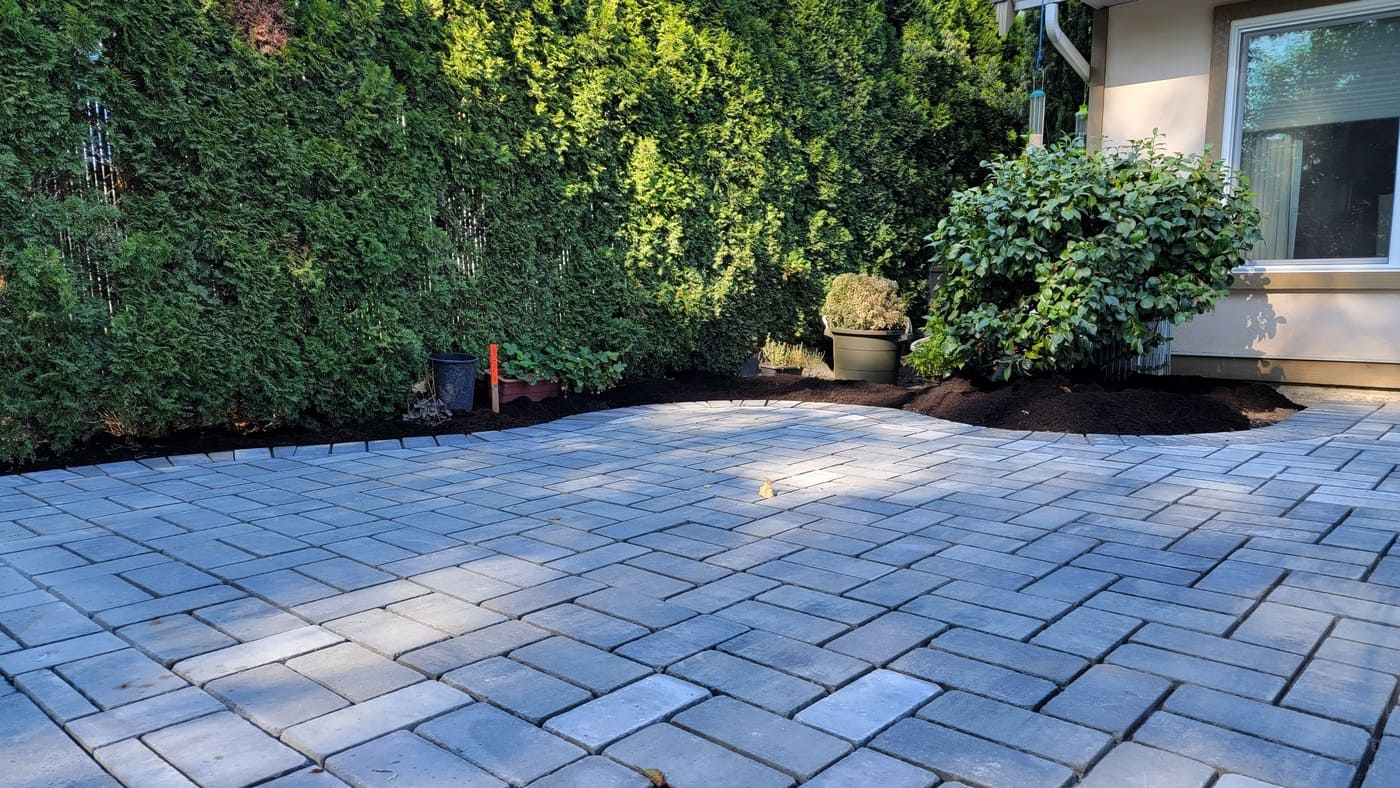
Maintaining accurate construction records helps property owners support manufacturer warranty claims, manage ongoing maintenance, and document capital improvements for property resale.
                 PROJECT DOCUMENTATION DOSSIER

  +-------------------------------------------------------------+
  |  1. Itemized Contractor Scope of Work & Invoice Receipts    |
  |  2. Material Receipts (Manufacturer, Line Name, Color ID)   |
  |  3. Manufacturer Warranty Certificates (25-Yr / Lifetime)   |
  |  4. As-Built Excavation Depth & Sub-Base Photos             |
  |  5. Polymeric Sand & Sealer Technical Product Sheets        |
  +-------------------------------------------------------------+
Illustrative Documentation Examples
Example 1: Property Resale Valuation Proof
A homeowner installs a 350 sq. ft. interlocking stone patio in suburban Mississauga. They organize builder tax invoices, excavation depth photos, and material receipts from a major Canadian manufacturer (e.g., Unilock) into a home records folder. When listing the property years later, this documentation verifies professional installation over an 8-inch base, confirming value to prospective buyers.
Example 2: Paver Warranty Replacement Claim
A property owner notices localized surface spalling on several concrete pavers following a severe winter frost cycle. Because they retained original purchase receipts specifying the exact line name and color batch, the manufacturer supplies replacement units under their lifetime structural warranty without administrative delays.
Closing Summary
Evaluating the Interlocking stone patio installation cost Canada landscape involves balancing upfront material expenses against site preparation and long-term durability. Installed prices generally average $17 to $45+ CAD per square foot, spanning entry-level concrete pavers up to premium natural stone or porcelain systems. By prioritizing deep aggregate base compaction, geotextile soil separation, proper slope grading, and polymeric joint maintenance, Canadian homeowners create a functional outdoor living space built to withstand harsh winter conditions.
Frequently Asked Questions (FAQ)
What is the average cost per square foot for an interlocking stone patio in Canada?
Most residential interlocking stone patio installations in Canada cost between $17 and $35 CAD per square foot installed for standard concrete pavers. Premium materials like natural stone or outdoor porcelain range from $25 to $45+ CAD per square foot installed.
How deep should the aggregate base be for an interlock patio in Canada?
For pedestrian patio foot traffic in Canada’s freeze-thaw climate, the aggregate base (Granular A crushed stone) should be excavated and compacted to a depth of 6 to 10 inches. Heavy clay soils or areas with poor drainage require a full 8 to 12 inches of compacted sub-base.
Do interlocking pavers crack in Canadian winter freezing conditions?
Unlike continuous poured concrete slabs, interlocking paver systems do not easily crack during winter freeze-thaw cycles because the individual stones flex along sand-filled joint seams. Proper deep sub-base compaction prevents water from pooling underneath, ensuring the patio remains level across seasonal temperature swings.