PVC Cafe Blinds vs Track Guided Outdoor Blinds Cost Australia
PVC Cafe Blinds vs. Track-Guided Outdoor Blinds Cost in Australia
An outdoor living space is a central feature of Australian residential architecture, providing an alfresco area for dining, entertaining, and relaxation. However, unpredictable rain, wind gusts, UV glare, and seasonal temperature swings often render open patios and verandas unusable without functional weather barriers. Enclosing an alfresco space with exterior blinds allows homeowners to regulate airflow, retain heat, block insects, and protect outdoor furniture year-round.
When evaluating enclosure options, Australian property owners most frequently weigh classic PVC cafe blinds against modern track-guided outdoor blind systems. While traditional cafe blinds offer an economical entry point with crystal-clear views, track-guided systems provide a sealed, gap-free perimeter with smooth, spring-balanced or motorized operation. Understanding the PVC cafe blinds vs track guided outdoor blinds cost Australia comparison requires analyzing material grades, mechanical hardware, installation complexity, wind performance, and long-term durability across different climates.
Overview of PVC Cafe Blinds vs Track Guided Outdoor Blinds Cost Australia
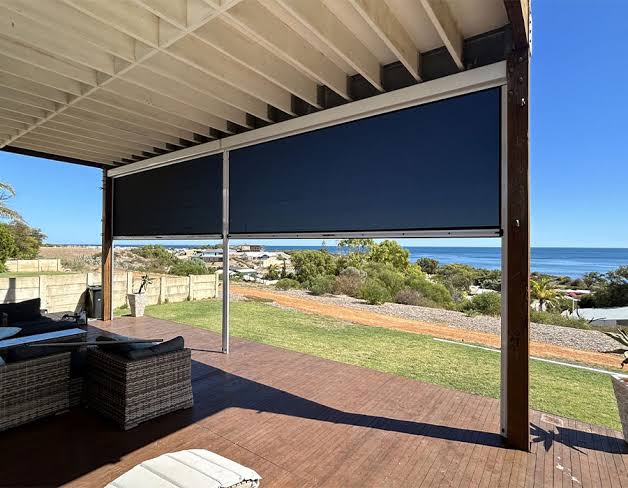
Evaluating a PVC cafe blinds vs track guided outdoor blinds cost Australia investment begins with understanding the core mechanical and material differences between floating-edge systems and channeled systems. Traditional PVC cafe blinds consist of heavy-duty marine-grade clear or tinted flexible PVC panels. They are typically raised and lowered using a rope-and-pulley mechanism, a manual hand crank, or vertical side zippers. Because the side edges remain unanchored or attached only with intermittent straps or zippers, traditional cafe blinds can flap under moderate wind loads, allowing drafts, rain, and insects to penetrate through perimeter gaps.
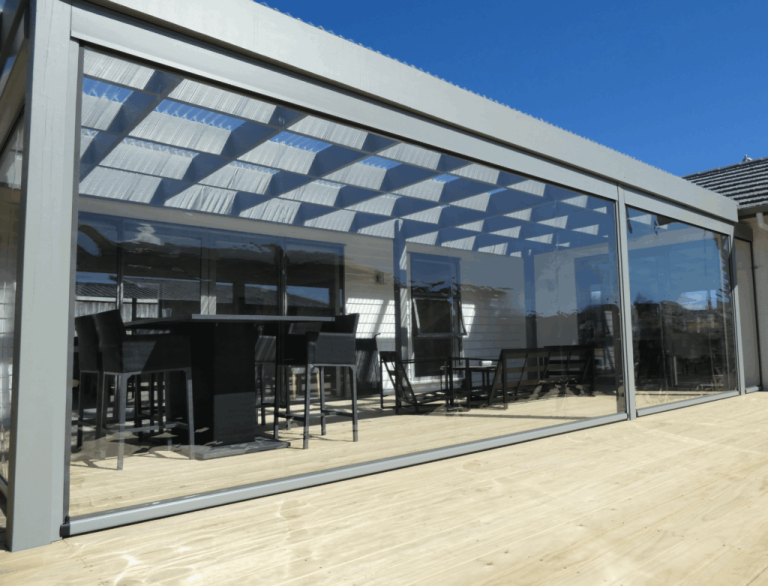
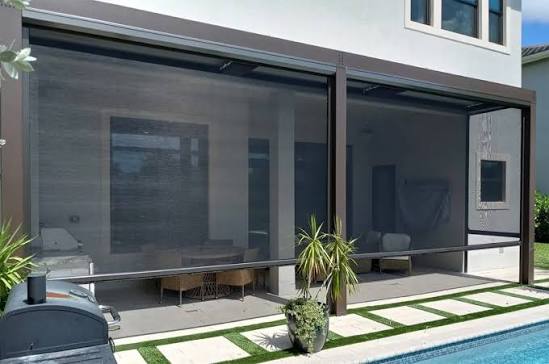
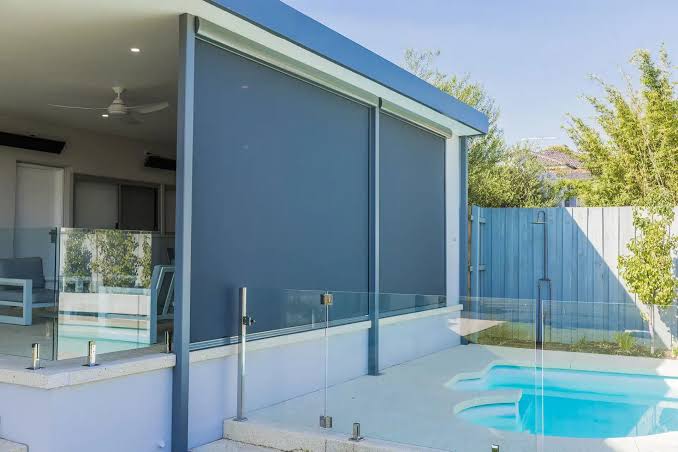
Track-guided outdoor blinds utilize a continuous side-channel design where the fabric edge is welded to a continuous spline that glides inside extruded aluminum tracks. This continuous side locking mechanism creates an airtight, gap-free seal that prevents flapping and resists blowouts during strong wind gusts. Track-guided blinds can be specified in marine-grade clear PVC, tinted PVC, or high-density woven shade mesh (such as 90% to 99% block-out solar fabrics).
                 PERIMETER SEAL & MECHANICAL DYNAMICS

      [ Traditional PVC Cafe Blind ]           [ Track-Guided Outdoor Blind ]
   +----------------------------------+     +----------------------------------+
   | Unanchored or Zippered Edges     |     | Spline-Locked Aluminum Tracks    |
   | Rope, Crank, or Strap Anchors    |     | Spring-Balanced or Motorized     |
   | Perimeter Drafts & Wind Flap     |     | 0mm Edge Gap / Wind-Resistant    |
   | Manual Roll-Up / Lower Cost      |     | Sealed Perimeter / Premium Cost  |
   | $150 – $400 (DIY) / $1,000–$2,500|     | $1,200 – $3,500+ per Blind       |
   +----------------------------------+     +----------------------------------+
Across the Australian market, total installed costs vary significantly based on operational mechanisms and overall dimensions. DIY off-the-shelf rope-operated PVC cafe blinds represent the lowest upfront cost, ranging from $150 to $400 per blind. Professionally measured and custom-installed crank-operated or zippered PVC cafe blinds average $1,000 to $2,500 per opening ($150 to $300 per square meter).
In contrast, custom manual track-guided systems typically range from $1,200 to $3,500 per blind ($230 to $450 per square meter installed), while motorized track-guided units with remote controls or smart home integration span from $2,500 to $5,000+ per blind ($400 to $650+ per square meter).
Key Categories and System Variations
Comparing the PVC cafe blinds vs track guided outdoor blinds cost Australia choices involves examining material grades, track mechanisms, and drive options across four primary product categories.
| Category / Type | Description | Common Use Case | Relative Cost & Labor Level |
| Basic Rope & Pulley PVC Cafe Blind | Unframed clear PVC skin rolled manually via ropes and pulleys; tied down with straps or bottom pegs. | Budget-conscious DIY patio enclosures and rental property upgrades. |
Cost: $150–$400 per blind Installed: DIY / Low Effort: Manual rolling |
| Crank & Straight-Drop PVC Blind | Heavy-duty PVC skin attached to a top roller tube operated by a detachable hand crank; fixed lower straps. | Standard residential verandas needing clear rain/wind protection on a budget. |
Cost: $1,000–$2,200 per blind Installed: $150–$300 / m² Effort: Moderate |
| Manual Track-Guided Blind (Spring-Balanced) | Clear PVC or woven mesh locked inside aluminum side tracks; weightless spring-balance manual glide. | High-traffic residential alfresco areas, cafes, and coastal verandas. |
Cost: $1,200–$3,500 per blind Installed: $250–$450 / m² Effort: Low (one-hand glide) |
| Motorized Track-Guided Blind | Track-guided system powered by an internal 240V or 12V battery tubular motor; remote or app control. | Wide openings (up to 5.5m–6m), high-ceilings, or luxury automated outdoor rooms. |
Cost: $2,500–$5,000+ per blind Installed: $400–$650+ / m² Effort: Very Low (push button) |
Selecting the Right Category
Choosing between these systems depends on local wind exposure, usage frequency, physical mobility, and aesthetic expectations. Rope-and-pulley PVC blinds suit budget-focused DIY applications, but their exposed ropes can tangle, and unsealed edges struggle in gusty weather. Crank-operated straight-drop blinds provide better tensioning than rope systems but require manual cranking for every adjustment. Manual track-guided systems represent the modern Australian benchmark, offering effortless one-hand operation, a gap-free seal, and high wind resistance, while motorized track-guided units suit expansive openings where manual operation is impractical.
Practical Application Scenarios
Scenario 1: Suburban Alfresco Weatherproofing on a Budget (3 Openings / 18 sq. m Total)
-
Context: A homeowner in Melbourne seeking to enclose a 3-sided rear patio against winter cold and rain on a limited budget.
-
Component List:
-
Three custom-made 0.75mm Japanese marine-grade clear PVC cafe blinds with crank gearboxes
-
Bottom hold-down straps anchored to concrete slab
-
Steel wall-mounting brackets and detachable crank handle
-
-
Relevance: Demonstrates an economical custom solution. Utilizing crank-operated straight-drop PVC cafe blinds provides a clear barrier against driving rain for $3,000 to $5,500 installed, bypassing the higher hardware expense of side aluminum tracks.
Scenario 2: Modern Alfresco Extension with High Wind Exposure (3 Openings / 22 sq. m Total)
-
Context: A coastal residence in Perth or Adelaide exposed to strong afternoon southerly winds, requiring a completely sealed outdoor room.
-
Component List:
-
Three manual spring-balanced track-guided blinds (e.g., Ziptrak or Zipscreen system)
-
Heavy-duty 95% block-out solar shade mesh in Charcoal
-
Extruded aluminum side tracks and bottom locking pins
-
Powder-coated aluminum pelmet boxes protecting top roller tubes
-
-
Relevance: Illustrates a high-performance installation. Track-guided mesh blinds block wind and glare while locking securely into side channels, preventing rattling or blowouts at an installed total of $5,500 to $9,500.
Scenario 3: Luxury Automated Outdoor Room (4 Openings / 35 sq. m Total)
-
Context: A custom home in Brisbane or Sydney featuring an expansive 5.5-meter wide alfresco opening and three secondary openings.
-
Component List:
-
Four motorized track-guided outdoor blinds with heavy-duty aluminum side channels
-
Combination of clear marine PVC (main view) and 99% block-out shade mesh
-
Integrated 240V tubular motors wired by a licensed electrician
-
Multi-channel handheld remote and smart home hub integration for automated scheduling
-
-
Relevance: Highlights a premium architectural installation where wide spans and automated operation require motorized drive systems, with project budgets ranging from $12,000 to $22,000+ total.
                 SCENARIO ENGINEERING & COST PROFILE

     Suburban Crank PVC (18 m²)         Track-Guided Mesh (22 m²)         Automated Luxury (35 m²)
   +---------------------------+     +---------------------------+     +---------------------------+
   | Crank-Operated PVC Skins  |     | Spring-Balanced Tracks    |     | Motorized Tubular Drives  |
   | Bottom Strap Anchors      |     | 95% Solar Shade Mesh      |     | Clear PVC & Mesh Mix      |
   | Moderate Wind Resistance  |     | Sealed Gap-Free Tracks    |     | Full Smart Integration    |
   | $3,000 – $5,500 Total     |     | $5,500 – $9,500 Total     |     | $12,000 – $22,000+ Total  |
   +---------------------------+     +---------------------------+     +---------------------------+
Comparison of Scenarios
Scenario 1 delivers functional rain and wind shelter at the lowest initial cost, making it ideal for budget-focused retrofits where minor drafts are acceptable. Scenario 2 provides superior structural stability and wind sealing using manual track-guided mesh, creating a true outdoor room across coastal regions. Scenario 3 prioritizes automated convenience and wide-span capability, where motorization and smart integration represent a significant portion of the total investment.
Financial Planning, Budgeting, and Resource Allocation

Evaluating the PVC cafe blinds vs track guided outdoor blinds cost Australia landscape requires breaking down line items into material skins, aluminum track extrusions, pelmet boxes, motorization electronics, and trade installation labor. Professional trade installation typically adds $150 to $300 per blind for manual units, while electrical trade wiring for hardwired motorized blinds adds an additional $150 to $350 per motor.
       TYPICAL INSTALLED COST RANGE PER SQUARE METER (AUD)

  Traditional PVC Cafe Blinds (Crank / Drop)
  [Materials $100-$200] + [Labor & Fittings $50-$100]  --->  $150 - $300 / m² Total

  Manual Track-Guided Systems (Mesh or PVC)
  [Materials $180-$300] + [Labor & Fittings $70-$150]  --->  $250 - $450 / m² Total

  Motorized Track-Guided Systems (With Electricals)
  [Materials $300-$480] + [Labor & Trades $100-$170]   --->  $400 - $650+ / m² Total
Sample Project Budget Model (3-Blind Alfresco Enclosure, Australian AUD Averages)
| Cost Category | Crank PVC Cafe Blinds | Manual Track-Guided | Motorized Track-Guided | Financial & Operational Notes |
| Blind Skins & Tubes | $2,100 – $3,800 | $2,800 – $5,200 | $3,500 – $6,500 | 0.75mm PVC vs. 95% Shade Mesh across 3 average openings (2.5m x 2.4m). |
| Track & Pelmet Hardware | $0 – $400 (Straps) | $1,200 – $2,200 | $1,500 – $2,800 | Extruded side channels, bottom locking pins, and powder-coated pelmets. |
| Motors & Controls | $0 | $0 | $1,200 – $2,200 | Tubular motors (12V battery or 240V), remotes, and smart hubs. |
| Trade Installation Labor | $450 – $900 | $600 – $1,200 | $800 – $1,500 | Professional mounting, track shimming, tensioning, and limit setting. |
| Electrical Wiring (Trades) | $0 | $0 | $450 – $900 | Licensed electrician fees for 240V power point installation. |
| Estimated Total Installed | $2,550 – $5,100 | $4,600 – $8,600 | $7,450 – $13,900 | National average installed cost estimates including GST. |
Operational Strategies, Hardware, and System Options
Selecting appropriate fabric skins, powder-coating finishes, and drive mechanics ensures that outdoor blinds perform reliably under Australian environmental conditions.
1. Clear Marine-Grade PVC vs. Woven Solar Shade Mesh
-
Description: Comparing flexible transparent PVC against high-density woven PVC/polyester mesh fabrics.
-
Performance Comparison:
-
Clear or Tinted PVC: 100% waterproof and windproof; retains ambient heating in winter and preserves unobstructed views. However, PVC can trap heat in summer, shrink or expand with temperature changes, and requires careful cleaning to avoid scratching.
-
Woven Solar Mesh (90%–99% Block-Out): Reduces UV glare and solar heat gain while allowing natural ventilation. Highly durable, dimensional stable, and low-maintenance, but allows fine mist to penetrate during severe driving rain.
-
                 FABRIC MATRIX COMPARISON

        Japanese Marine PVC (0.75mm)            Woven Solar Shade Mesh (95%)
      +-----------------------------+          +-----------------------------+
      | 100% Wind & Rain Proof      |          | 95% UV & Glare Reduction    |
      | Complete Thermal Retention  |          | Maintains Air Ventilation   |
      | Preserves Glass-Like View   |          | Zero Shrinkage / Scratching |
      | Requires Special PVC Care   |          | High Heat & Sun Rejection   |
      +-----------------------------+          +-----------------------------+
2. Spring-Balanced Manual Glide Systems
-
Description: Utilizing an internal counter-balance spring hidden inside the top roller tube of track-guided blinds.
-
Advantages: Allows the blind to be raised or lowered effortlessly by hand to any height without cranks, ropes, or chains; locks securely into bottom brackets.
-
Disadvantages: Spring tension must be calibrated correctly during installation to match blind weight.
3. Powder-Coated Aluminum Pelmets and Side Channels
-
Description: Custom powder-coating aluminum tracks and pelmets to match standard Colorbond architectural colors (e.g., Monument, Woodland Grey, Surfmist).
-
Advantages: Protects the rolled-up fabric skin from UV exposure, rain, and bird droppings; delivers a clean, integrated finish that matches home gutters and window frames.
-
Disadvantages: Adds $250 to $500 per blind in hardware costs.
Safety, Risks, and Common Environmental Challenges
Outdoor blinds are subjected to significant wind loads and UV radiation. Improper material selection or poor track installation can lead to structural damage.
+------------------------------------------------------------------------+
|                     RISK & FAILURE MITIGATION MATRIX                   |
+------------------------------------------------------------------------+
| ISSUE / RISK       | ROOT CAUSE               | PREVENTION & MITIGATION|
+--------------------+--------------------------+------------------------+
| PVC Clouding &     | Using low-grade PVC or   | Specify 0.75mm Japanese|
| Yellowing          | cleaning with harsh      | optical PVC; wash with |
|                    | chemical solvents.       | specialized PVC cleaner.|
+--------------------+--------------------------+------------------------+
| Track Jamming &    | Side channels installed  | Shim side tracks to    |
| Fabric Wrinkling   | out of plumb; post       | absolute plumb; check  |
|                    | deflection under load.   | timber post movement.  |
+--------------------+--------------------------+------------------------+
| Wind Blowout &     | Rolling down clear PVC or| Retract clear PVC in   |
| Fabric Tearing     | mesh during severe storm | extreme winds; install |
|                    | gusts (>50 km/h).        | automated wind sensors.|
+--------------------+--------------------------+------------------------+
| PVC Shrinkage &    | Thermal expansion/       | Leave expansion gaps in|
| Winter Stiffness   | contraction characteristic| bottom locking pins;   |
|                    | inherent to PVC skins.   | operate during mid-day.|
+------------------------------------------------------------------------+
Maintenance Protocols and Long-Term Management
Proper maintenance preserves optical clarity on clear PVC, prevents mold growth on shade mesh, and maintains smooth track movement.
                   OUTDOOR BLIND CARE LIFECYCLE

  Installation     Monthly Clean          Bi-Annual Check        Year 3 - 5
  [Tracks Set] -> [Hose Down Mesh/PVC] -> [Clean Track Channels]-> [Re-Tension Springs]
       |                  |                    |                      |
  Check Plumb     Wash off Dust/Salt   Apply Dry Silicone     Adjust Spring Balance
  Set Motor Limits Clean with Soft Cloth Spray to Side Tracks  Service Tubular Motor
Ongoing Care Protocols
-
Clear PVC Cleaning (Monthly): Hose down clear PVC with fresh water to remove dust and salt. Clean using a soft microfiber cloth and specialized non-abrasive PVC cleaner. Never use glass cleaners, Windex, or methylated spirits, which strip plasticizers and cause permanent yellowing or clouding.
-
Shade Mesh Washing (Quarterly): Wash woven mesh skins with mild detergent, warm water, and a soft-bristle broom to remove dirt and spider webs.
-
Track Channel Maintenance (Bi-Annually): Vacuum dirt and dead insects out of aluminum side tracks. Spray inside the tracking channels with dry silicone spray to maintain smooth sliding action. Avoid grease or oil lubricants, which attract dust and gum up tracking splines.
-
Roll-Up Storage Guidelines: Never roll up clear PVC blinds while they are wet or damp, as trapped moisture causes milky white water-staining. Always lower PVC blinds during warm sunshine periodically to allow the plastic skin to warm up, stretch, and relax out packing wrinkles.
Documentation, Warranties, and Asset Records
Archiving installation invoices, fabric origin certificates, and motor warranties protects home value and simplifies future service claims.
                 PROJECT DOCUMENTATION DOSSIER

  +-------------------------------------------------------------+
  |  1. Detailed Installer Tax Invoice & Scope of Works         |
  |  2. Fabric Manufacturer Certificate (Japanese PVC / Mesh)   |
  |  3. Track System Warranty Certificate (e.g., Ziptrak/Zipscreen)|
  |  4. Motor & Automation Warranty Documents (5-10 Years)     |
  |  5. Electrical Safety Compliance Certificate (Part P / 240V)|
  +-------------------------------------------------------------+
Practical Documentation Examples
Example 1: Motor Warranty Claim File
A property owner installs four motorized track-guided blinds. Five years after installation, one drive motor fails to respond to remote commands. The owner retrieves their archived documentation dossier specifying the motor serial code and electrician’s compliance certificate. The installer submits the claim, and the manufacturer replaces the drive motor under its 7-year warranty without administrative delay.
Example 2: Property Resale Value Proof
A homeowner installs a $9,000 manual track-guided mesh blind package around their rear alfresco area. They compile tax invoices, Colorbond match certificates, and fabric warranty cards into a digital home folder. When selling the property, the real estate agent presents this documentation to buyers, demonstrating a turnkey, low-maintenance outdoor room that increases property marketability.
Closing Summary
Evaluating the PVC cafe blinds vs track guided outdoor blinds cost Australia decision involves balancing upfront purchase costs against long-term wind performance, ease of use, and aesthetic integration. Traditional PVC cafe blinds offer a lower initial investment ($1,000 to $2,500 per opening) for basic rain and wind shelter, but their unanchored edges allow drafts and require manual cranking or strapping. Track-guided systems represent a higher initial outlay ($1,200 to $3,500 for manual; $2,500 to $5,000+ for motorized), but reward property owners with a gap-free, wind-resistant seal, effortless one-hand operation, and a longer operational lifespan.
Frequently Asked Questions (FAQ)
What is the average cost of track-guided outdoor blinds in Australia?
In Australia, custom manual track-guided outdoor blinds (such as Ziptrak or Zipscreen) typically cost between $1,200 and $3,500 per blind installed ($230 to $450 per square meter). Adding motorized remote operation increases total costs to $2,500 to $5,000+ per blind installed.
Are track-guided outdoor blinds worth the extra cost over standard PVC cafe blinds?
Yes, for most Australian homes exposed to moderate or high winds. Track-guided blinds lock the fabric securely inside aluminum side channels, creating an airtight, gap-free seal that prevents flapping, rattling, and drafts. Traditional PVC cafe blinds lack side tracks, allowing wind and rain to penetrate perimeter gaps.
Can clear PVC be used in track-guided outdoor blinds?
Yes, clear or tinted marine-grade PVC can be welded to tracking splines and installed inside track-guided systems. However, clear PVC expands and contracts with temperature changes more than woven shade mesh, requiring precise track shimming and careful operation during extreme summer heat or winter cold.
What is the difference between clear PVC and shade mesh for outdoor blinds?
Clear PVC is 100% windproof and rainproof, retaining heat in winter and preserving crystal-clear views, but it can trap heat in summer and requires specialized cleaning. Woven shade mesh (90%–99% block-out) blocks solar heat and UV glare while allowing airflow, making it ideal for summer shade and low-maintenance privacy.