Kwila vs Composite Decking Cost per m2 NZ Guide
Kwila Decking vs. Composite Decking Cost per Square Metre in New Zealand
Constructing an outdoor deck is one of the most popular ways for New Zealand homeowners to create seamless indoor-outdoor flow and expand functional living space. When selecting surface materials, property owners frequently compare traditional imported hardwood—most notably Kwila (Merbau)—against manufactured wood-plastic composite alternatives. Both material choices offer distinct aesthetic profiles, structural performance characteristics, and resistance to New Zealand’s high UV levels and damp winter conditions, but they represent different long-term financial commitments.
Evaluating the Kwila decking vs composite decking cost per square metre NZ landscape requires analyzing initial supply costs, subframe requirements, specialized fasteners, local labor rates, and cumulative maintenance over a multi-decade lifespan. While Kwila presents a rich natural wood grain and a lower initial purchase price, composite decking eliminates routine sanding, staining, and tannin bleeding. This comprehensive guide provides an objective breakdown of material tiers, construction scenarios, budgeting models, and ongoing maintenance guidelines across the New Zealand market.
Overview of Kwila Decking vs Composite Decking Cost per Square Metre NZ
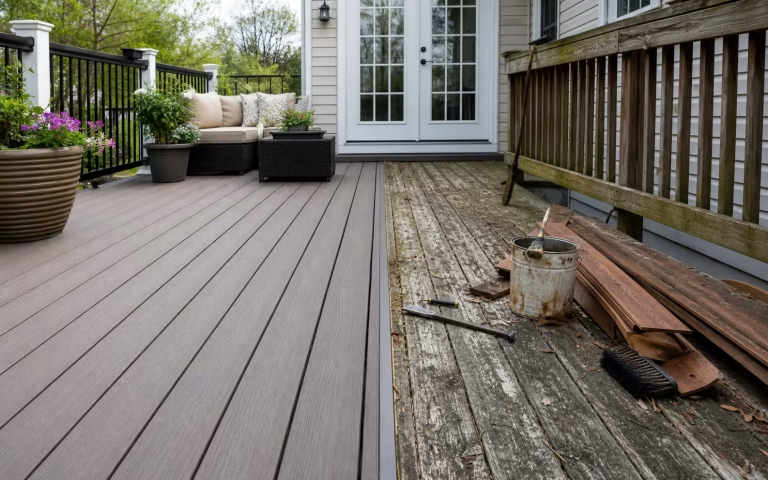
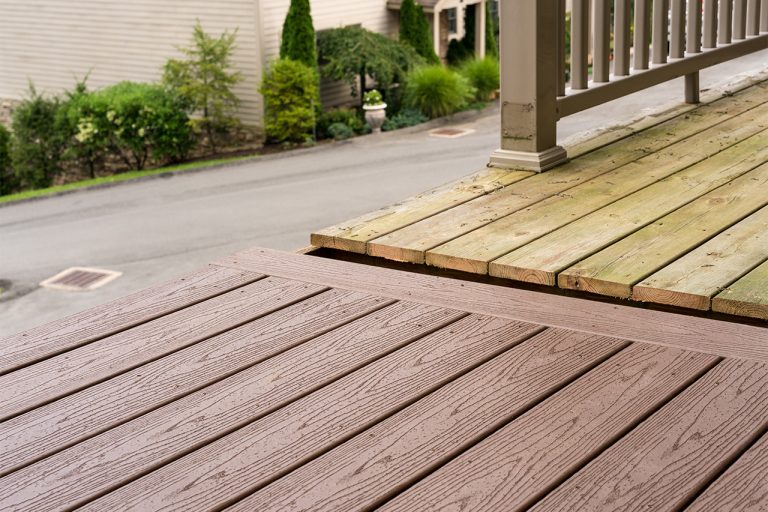
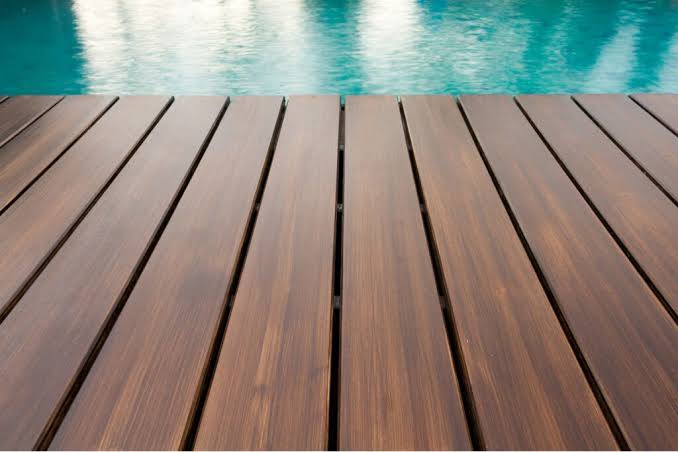
Composite decking is an engineered material made from a mixture of recycled wood fibers, reclaimed plastics (such as HDPE), and binding resins, often encapsulated in a protective polymer outer cap. While composite boards carry a higher upfront material cost per square metre, they do not leach tannins, do not splinter, and do not require periodic oiling or staining to maintain their appearance.
                 DECISION MATRIX: UPFRONT VS. LIFECYCLE COST

      [ Kwila Hardwood Timber ]               [ Capped Composite Decking ]
      +------------------------+              +--------------------------+
      | Lower Upfront Material |              | Higher Upfront Material  |
      | Higher Pre-Drill Labor |              | Fast Hidden Clip System  |
      | Tannin Leaching Risk   |              | Zero Tannin Leaching     |
      | Annual Oiling Required |              | Low Wash-Only Maintenance|
      | 20–30+ Year Lifespan   |              | 25–30+ Year Warranty     |
      +------------------------+              +--------------------------+
                   |                                       |
                   +-------------------+-------------------+
                                       |
                         [ 8 to 12-Year Parity Point ]
                       Cumulative Maintenance Normalizes
                        Total Cost of Ownership (TCO)
In New Zealand, supply-only material costs for Kwila decking boards generally range from $100 to $180 NZD per square metre, depending on board width (e.g., 90x19mm vs. 140x19mm) and timber grade. Composite decking board supply ranges from $120 to $220+ NZD per square metre for mid-tier capped profiles up to high-end polymer options. When factoring in H3.2/H4 treated pine substructure framing, footings, fixings, and professional trade labor ($70–$120+ NZD/hour), total installed prices average $350 to $650 NZD per m² for Kwila and $450 to $850+ NZD per m² for composite decking.
Key Categories, Material Options, and System Variations
Evaluating Kwila decking vs composite decking cost per square metre NZ options requires comparing board profiles, capping technologies, and structural fixing requirements across both material classes.
| Category / Type | Material Description | Common Use Case | Relative Cost & Effort Level |
| Standard Kwila (90x19mm) | Kiln-dried tropical hardwood with smooth or pencil-round edges. | Suburban residential decks, verandahs, and traditional outdoor living areas. |
Supply Material: $100–$140 NZD / m² Installed Total: $350–$550 NZD / m² Labor Effort: High (pre-drilling required) |
| Wide-Board Kwila (140x19mm) | Wider hardwood profile providing a modern look with fewer joint lines per square metre. | Larger outdoor entertainment platforms and commercial boardwalks. |
Supply Material: $130–$180 NZD / m² Installed Total: $420–$620 NZD / m² Labor Effort: High (precise fixing and pre-drilling) |
| Uncapped First-Gen Composite | Wood-plastic composite core without a protective outer polymer shell. | Covered porches or light-use residential decks on a moderate budget. |
Supply Material: $120–$150 NZD / m² Installed Total: $450–$600 NZD / m² Labor Effort: Moderate (hidden clip system) |
| Mid-Tier Capped Composite | Co-extruded WPC board encapsulated in a protective polymer shell on 3 sides. | Standard family decks, pool surrounds, and coastal environments. |
Supply Material: $150–$190 NZD / m² Installed Total: $550–$750 NZD / m² Labor Effort: Low-Moderate (fast hidden clip layout) |
| Premium Capped Polymer / PVC | 100% synthetic PVC or 4-side capped composite with deep wood-grain embossing. | High-end architectural homes, extreme marine environments, and full-sun decks. |
Supply Material: $190–$250+ NZD / m² Installed Total: $700–$950+ NZD / m² Labor Effort: Low-Moderate (thermal expansion spacing) |
Choosing Between Material Options
Selecting an appropriate decking material depends on maintenance willingness, proximity to light-colored stone or rendered walls, pool exposure, and budget limitations. Homeowners who prefer natural timber aesthetics, cooler underfoot temperatures under direct sunlight, and lower upfront construction costs generally choose 140x19mm Kwila. Conversely, property owners seeking a splinter-free surface, zero tannin bleeding onto adjacent concrete, and relief from annual sanding or oiling usually select capped composite systems.
Practical Construction & Site Application Scenarios
Scenario 1: Standard Suburban Ground-Level Deck (25 m²)
-
Context: A flat suburban backyard in Auckland or Christchurch replacing a lawn with a 25 m² outdoor dining deck connected to a lounge sliding door.
-
Component List:
-
H3.2 treated pine framing joists (450mm centers for Kwila; 400mm max for composite)
-
Concrete footing pads with H4 treated timber posts
-
Surface decking (140x19mm Kwila vs. Capped Composite)
-
Fastening hardware (304 stainless steel face screws for Kwila vs. Hidden clips for composite)
-
Perimeter fascia boards
-
-
Relevance: Represents a baseline residential installation where subframe costs remain consistent, isolating the impact of surface board materials and trade labor on the final budget.
Scenario 2: Elevated Second-Story Deck with Stairs & Safety Balustrades (35 m²)
-
Context: An elevated deck attached to a sloping site in Wellington requiring structural posts, safety balustrades, and stairs.
-
Component List:
-
Concrete footings with galvanized steel stirrups and H5 treated timber posts
-
Heavy-duty bearer and joist subframe matrix compliant with NZS 3604
-
Surface decking (Kwila vs. Premium Capped Composite)
-
Powder-coated aluminum balustrade with glass or stainless steel wire infill
-
One 5-step stair run with closed risers
-
-
Relevance: Demonstrates how elevated engineering, council consent fees, and safety balustrades account for a large portion of the contract, making the board material upgrade a smaller percentage of the overall budget.
Scenario 3: Poolside Deck Surrounding Saltwater Pool (20 m²)
-
Context: Building a low-clearance deck surrounding an in-ground swimming pool adjoining light-colored concrete pavers.
-
Component List:
-
Low-clearance aluminum or H3.2 ground-contact subframe with butyl joist tape
-
316 marine-grade stainless steel fixings
-
Capped composite boards with P4/P5 slip-resistance rating vs. pre-bleached Kwila
-
-
Relevance: Highlights a sensitive application where Kwila’s tannin bleeding presents a risk of permanently staining surrounding concrete pavers, making composite the functional preference.
                 SCENARIO ENGINEERING & COST PROFILE

      Ground-Level (25 m²)              Elevated + Balustrade (35 m²)
      +----------------------+          +----------------------------+
      | Low Subframe Cost    |          | Structural Posts & Framing |
      | Standard Framing     |          | NZS 3604 Safety Balustrade |
      | Fast Trade Execution |          | Council Consent Required   |
      | $350 - $550 / m²     |          | $600 - $900+ / m²          |
      +----------------------+          +----------------------------+
Comparison of Scenarios
Scenario 1 allows the material price difference between Kwila and composite to show clearly in contractor quotes. In Scenario 2, structural posts, council building consents, and safety balustrades dominate overall expenses. Scenario 3 prioritizes functional risk management—such as preventing tannin stains and salt-water degradation—over initial purchase price.
Financial Planning, Budgeting, and Resource Allocation
Evaluating the Kwila decking vs composite decking cost per square metre NZ landscape requires separating upfront construction expenses from long-term operating costs. Across New Zealand, licensed building practitioners (LBPs) charge $70 to $120+ per hour or $100 to $200 per m² for decking installation labor alone.
        INSTALLED COST VS. 15-YEAR TOTAL COST OF OWNERSHIP (25 m² DECK)

  Kwila Hardwood Timber Deck
  [Initial Build $11,250] + [15-Yr Maintenance $6,000]  --->  $17,250 NZD Total

  Mid-Tier Capped Composite
  [Initial Build $15,000] + [15-Yr Maintenance $450]    --->  $15,450 NZD Total
Sample Project Financial Model (25 m² Deck, NZD Averages)
| Category | Kwila Hardwood Timber | Mid-Tier Capped Composite | Financial & Operational Notes |
| Subframe Timber & Footings | $1,800 – $2,800 | $1,800 – $2,800 | H3.2 treated pine joists, H4/H5 posts, and concrete. |
| Surface Boards (25 m² + Waste) | $2,750 – $4,500 | $3,750 – $5,500 | Board supply (Kwila $110–$180/m² vs Composite $150–$220/m²). |
| Fasteners & Fixings | $250 – $450 | $450 – $800 | 304/316 stainless screws (Kwila) vs Hidden clips (Composite). |
| Trade Labor (LBP Builder) | $3,000 – $5,000 | $2,500 – $4,200 | Kwila labor is higher due to pre-drilling every fixing point. |
| Initial Finish / Tannin Prep | $250 – $450 | $0 | Tannin wash, cleaner, and initial oil coat for Kwila. |
| Estimated Upfront Cost | $8,050 – $13,200 | $8,500 – $13,300 | Upfront Installed Total (~$320–$530/m² Kwila vs $340–$530/m² Composite). |
| Est. 15-Year Maintenance Cost | $4,500 – $7,500 | $300 – $600 | Kwila oil ($300–$500/yr) vs Composite soap wash ($20–$40/yr). |
| 15-Year Total Cost (TCO) | $12,550 – $20,700 | $8,800 – $13,900 | Composite becomes more cost-effective over a 15-year lifecycle. |
Note: Figures serve as illustrative national baseline averages in NZD (including GST) and may vary based on site access, geographic location (Auckland, Wellington, Christchurch), council permits, and trade availability.
Engineering Strategies, Tools, and Installation Systems
Selecting appropriate fastening systems and timber handling methods impacts both construction speed and structural performance under New Zealand weather conditions.
1. Pre-Drilling and Countersinking (Kwila Requirement)
-
Description: Drilling pilot holes and countersinking every fixing location before driving stainless steel screws into dense Kwila timber.
-
Advantages: Prevents timber splitting at board ends and ensures screw heads sit flush with the surface.
-
Disadvantages: Increases trade labor hours by 30% to 50% compared to clip-based systems.
2. Hidden Clip Fastening Systems (Composite Advantage)
-
Description: Specialized metal or plastic clips fitted into grooved composite board edges and secured directly into joists.
-
Advantages: Leaves a clean, fastener-free surface, automatically sets expansion gaps, and speeds board installation.
-
Disadvantages: Hardware material costs are higher than standard screws, and replacing an individual damaged center board requires additional effort.
       FACE-SCREWED TIMBER (KWILA)               HIDDEN CLIP COMPOSITE
    +------------------------------+       +------------------------------+
    |   [v]                  [v]   |       |        [   ]                 |
    |==============================|       |========|===|=================|
    |      Subframe Joist          |       |        |Clip| Subframe Joist |
    +------------------------------+       +------------------------------+
    (Pre-drilled exposed screws)           (Clean surface; auto spacing)
3. Butyl Joist Protection Flashing Tape
-
Description: A self-adhesive butyl rubber tape applied across the top face of treated pine subframe joists before board placement.
-
Advantages: Prevents moisture from pooling in screw holes, extending subframe life to match 25+ year composite board warranties.
-
Disadvantages: Adds $120 to $250 NZD in material costs for a standard deck.
4. Chemical Tannin Stripping & Weathering Strategy (Kwila)
-
Description: Applying specialized timber cleaners or allowing 6 to 8 weeks of rain weathering to extract surface tannins before oiling Kwila.
-
Advantages: Opens wood pores for better oil penetration and reduces tannin staining on surrounding hardscaping.
-
Disadvantages: Delays final deck completion and requires careful containment near stone or concrete.
Environmental Risks, Structural Hazards, and Common Pitfalls
Both Kwila timber and composite decking present specific environmental, structural, and maintenance challenges under New Zealand climate conditions.
+------------------------------------------------------------------------+
|                    RISK & FAILURE MITIGATION MATRIX                    |
+------------------------------------------------------------------------+
| ISSUE / RISK       | ROOT CAUSE               | PREVENTION & MITIGATION|
+--------------------+--------------------------+------------------------+
| Tannin Bleeding &  | Kwila's water-soluble    | Wash with tannin washes|
| Concrete Staining  | extractives leach out in | before building; use   |
|                    | initial rain cycles [1.1.2].| composite near stone [1.1.2].|
+--------------------+--------------------------+------------------------+
| Thermal Expansion  | Composite boards expand  | Maintain 4–6mm side and|
| & Board Buckling   | in hot weather if gapping| 6–10mm end expansion   |
|                    | is insufficient [1.2.5]. | gaps per spec [1.2.5]. |
+--------------------+--------------------------+------------------------+
| Timber Splintering | Kwila un-oiled, dried    | Oil every 12 months;   |
| & Surface Checking | out under intense NZ     | wash with dedicated    |
|                    | UV radiation [1.1.2].    | timber cleaner [1.1.3].|
+--------------------+--------------------------+------------------------+
| Subframe Joist     | Installing composite on  | Keep joists at 400mm   |
| Sagging / Flexing  | 600mm centers meant for  | max for composite boards|
|                    | thick timber [1.2.5].    | (450mm max) [1.2.5].   |
+------------------------------------------------------------------------+
Maintenance Protocols & Long-Term Management
A primary distinction when assessing the Kwila decking vs composite decking cost per square metre NZ landscape is ongoing upkeep.
                    10-YEAR MAINTENANCE TIMELINE

  Kwila Hardwood Timber:
  Year 1       Year 2       Year 4       Year 6       Year 8       Year 10
  [Oil/Stain]  [Oil/Stain]  [Oil/Stain]  [Sand/Oil]   [Oil/Stain]  [Sand/Oil]
  (Requires ongoing washing, sanding, and oiling every 12 months)

  Capped Composite Decking:
  Year 1       Year 2       Year 4       Year 6       Year 8       Year 10
  [Wash]       [Wash]       [Wash]       [Wash]       [Wash]       [Wash]
  (Requires only periodic soap-and-water scrub)
Ongoing Care Protocols
For Kwila Timber Decks:
-
Annual Inspection (Every 12 Months): Check for raised screw heads, loose boards, and dry surface fibers.
-
Chemical Washing: Wash with a specialized sodium percarbonate timber cleaner to strip dirt, oxidation, and old oil coats.
-
Oil Re-Application: Apply 2 coats of quality decking oil annually. Expect to spend $100 to $250 NZD in materials (or $30–$50/m² for trade service) every 1 to 2 years.
For Composite Decks:
-
Seasonal Wash (2 to 3 Times Annually): Scrub with warm, soapy water and a soft-bristle broom to clear pollen, dirt, and mold spores.
-
Ventilation Clearance: Keep side and end gaps clear of leaf litter to preserve subframe airflow.
-
Spill Care: Clean oil, grease, or food spills promptly using household degreasers to prevent cap discoloration.
Project Documentation & Outcome Tracking
Maintaining detailed project records helps New Zealand property owners support warranty claims, document NZBC structural compliance, and provide verification during home sales.
                 PROJECT DOCUMENTATION DOSSIER

  +-------------------------------------------------------------+
  |  1. Detailed LBP Builder Contract & Scope of Work           |
  |  2. Material Receipts (Board Brand, Grade, Batch ID)        |
  |  3. Manufacturer Warranty Certificate (15–30 Years)         |
  |  4. Local Council Code Compliance Certificate (CCC if req)  |
  |  5. Maintenance Logbook (Oiling Dates & Product Receipts)   |
  +-------------------------------------------------------------+
Illustrative Documentation Examples
Example 1: Resale Property Valuation Verification
A homeowner builds a 30 m² capped composite deck in Auckland. They compile builder tax invoices, local council Code Compliance Certificates (CCC), and a 25-year manufacturer warranty certificate into a home records portfolio. When selling the property years later, this documentation verifies professional construction and confirms warranty protection for the prospective buyer.
Example 2: Warranty Claim Processing
A property manager notices isolated surface swelling on several composite deck boards. Because they retained original material purchase invoices and batch number receipts, they submit a claim directly to the manufacturer. The supplier confirms a manufacturing anomaly and supplies replacement boards under warranty without administrative delay.
Closing Summary
Evaluating the Kwila decking vs composite decking cost per square metre NZ decision involves balancing initial construction expenses against long-term operational costs. Kwila offers a lower initial board purchase price ($100–$180/m² supply), authentic natural wood grain, and high structural density. However, its need for annual oiling ($300–$500/year) and risk of tannin bleeding increase its 15-year cost of ownership. Composite decking carries a higher upfront material price ($120–$250+/m² supply) but eliminates oiling, staining, and tannin staining, making it a lower-maintenance, cost-effective asset over a 15- to 25-year operational life.
Frequently Asked Questions (FAQ)
Is Kwila cheaper per square metre than composite decking in New Zealand?
Raw Kwila decking boards ($100–$180/m² supply) are generally cheaper than composite boards ($120–$250+/m² supply). However, because Kwila requires pre-drilling every screw hole, labor costs are often higher. As a result, total installed prices overlap ($350–$650/m² for Kwila vs $450–$850+/m² for composite).
How do you stop Kwila decking from staining concrete or house walls?
Kwila contains natural water-soluble tannins that leach out during initial rain cycles. To manage this, builders apply specialized tannin removers or allow 6 to 8 weeks of weathering before applying a quality decking oil. Capped composite decking produces zero tannin runoff, making it ideal near light stone or rendered walls.
Do you need a council building consent for a deck in New Zealand?
Under the NZ Building Act, decks under 1.5 metres high generally do not require a building consent, provided they meet structural building codes (NZS 3604) and safety barrier regulations. Decks over 1.5 metres high require a formal building consent and safety balustrades.