Permeable Paver Driveway Installation Cost Near Me USA (2026 Guide)
Permeable Paver Driveway Installation Cost Near Me USA
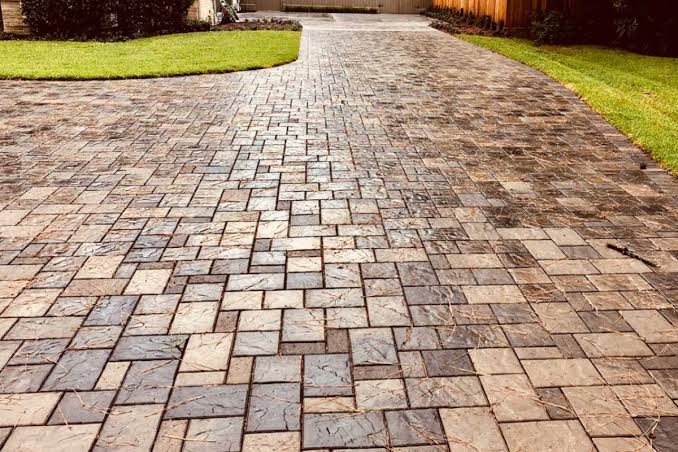
Stormwater management and sustainable land development have transformed how residential driveways are designed across the United States. Permeable paver driveways allow rainwater to infiltrate directly through open surface joints into a subterranean aggregate storage reservoir, returning clean runoff into local aquifers while reducing municipal drainage overflow. In addition to their environmental benefits, permeable paving systems provide superior freeze-thaw durability, eliminate standing water, and deliver an elevated curb appeal compared to traditional poured asphalt or continuous concrete slabs.
Evaluating the Permeable paver driveway installation cost near me USA involves analyzing raw material choices, deep excavation requirements, specialized aggregate sub-bases, and regional labor rates. National installed averages generally fall between $8.00 and $25.00+ per square foot, with a standard two-car driveway (600 to 640 square feet) ranging from $4,800 to $15,000+ depending on soil type, site slope, and material selection. This comprehensive guide breaks down system mechanics, material categories, installation scenarios, budgeting frameworks, and long-term maintenance practices to help property owners plan effectively.
Overview of Permeable Paver Driveway Installation Cost Near Me USA
Understanding the Permeable paver driveway installation cost near me USA requires evaluating a multi-layered civil engineering assembly rather than a simple surface pavement. Unlike conventional impervious driveways that channel stormwater toward street gutters via surface slopes, a permeable paver system acts as an active water filtration and detention basin. The system consists of open-jointed surface pavers, a fine bedding aggregate layer, a open-graded crushed stone choked sub-base, and an open-graded stone base reservoir resting on uncompacted or geotextile-lined native soil.
Property owners across various U.S. climate zones choose permeable systems to resolve persistent surface flooding, meet municipal impervious cover restrictions, or earn local stormwater utility fee credits. Because 50% to 70% of the structural investment resides underground in deep crushed stone reservoir layers, excavation depth and base aggregate volume drive total project expenses. Selecting between interlocking concrete units, plastic cellular grids, pervious concrete, or natural stone allows property managers to tailor structural load capacities to household vehicles while keeping initial capital within budget.
                     PERMEABLE PAVER DRIVEWAY CROSS-SECTION

      [ Surface Level ]    Permeable Interlocking Pavers (3-1/8" / 80mm thick)
      === (Open Joints) === Filled with ASTM #8 or #89 Aggregate Chip ============
      [ Bedding Layer ]    1-1/2" to 2" ASTM #8 Open-Graded Choker Stone
      --------------------------------------------------------------------------
      [ Base Layer ]       4" ASTM #57 Crushed Open-Graded Stone Base
      ..........................................................................
      [ Reservoir Sub-Base]6" to 18" ASTM #2 Coarse Open-Graded Stone Reservoir
      ~~~~~~~~~~~~~~~~~~~~~~~~~~~~~~~~~~~~~~~~~~~~~~~~~~~~~~~~~~~~~~~~~~~~~~~~~~
      [ Filter Layer ]     Geotextile Non-Woven Filter Fabric
      ~~~~~~~~~~~~~~~~~~~~~~~~~~~~~~~~~~~~~~~~~~~~~~~~~~~~~~~~~~~~~~~~~~~~~~~~~~
      [ Native Subgrade ]  Uncompacted Infiltrating Soil or Underdrain Pipe
Key Categories, Material Options, and Approaches
Evaluating the Permeable paver driveway installation cost near me USA depends significantly on the chosen surface paving material and underlying grid framework. Each material category varies in weight capacity, aesthetic style, joint infill needs, and installation complexity.
| Category / Type | Description | Common Use Case | Time / Cost / Effort Level |
| Plastic Cellular Grid / Turf Pavers | High-density polyethylene (HDPE) honeycomb grids filled with clean gravel or turf grass. | Eco-friendly residential driveways, overflow parking, and RV pads. |
Material: $2.00–$5.00/sq. ft. Installed Total: $5.00–$12.00/sq. ft. Effort: Moderate (DIY-friendly grid assembly) |
| Concrete Grid Pavers (Turfstone) | Heavy molded concrete blocks with large void openings for turf grass or gravel aggregate. | Country estates, suburban aprons, and erosion-prone sloped driveways. |
Material: $3.00–$6.00/sq. ft. Installed Total: $6.00–$18.00/sq. ft. Effort: Moderate-High (heavy block handling) |
| Permeable Interlocking Concrete Pavers (PICP) | Dense solid concrete units with engineered joint tabs that create wide, aggregate-filled gaps. | High-end suburban driveways requiring strong structural support and custom designs. |
Material: $5.00–$12.00/sq. ft. Installed Total: $15.00–$25.00/sq. ft. Effort: High (precise edge cuts and screeding) |
| Pervious Concrete / Porous Asphalt | Monolithic poured slab mixtures formulated without fine sand, creating open void spaces for water flow. | Urban residential driveways and long rural access lanes needing uniform paving. |
Material: $3.00–$7.00/sq. ft. Installed Total: $7.00–$16.00/sq. ft. Effort: High (requires specialized crew and mix) |
| Permeable Natural Stone Cobblestone | Quarried granite, basalt, or bluestone blocks installed with widened open aggregate joint gaps. | Luxury historical properties and custom luxury residential vehicular courtyards. |
Material: $12.00–$25.00/sq. ft. Installed Total: $25.00–$50.00+/sq. ft. Effort: Very High (hand-set stone masonry) |
How to Choose Between Material Options
Selecting an appropriate system depends on target vehicular load capacity, local climate factors, maintenance willingness, and project budget. Plastic or concrete grid pavers offer budget-friendly solutions for light residential passenger vehicles while incorporating green turf aesthetic elements. Permeable Interlocking Concrete Pavers (PICP) represent the standard choice for suburban residential driveways due to their high compressive strength (over 8,000 PSI), resistance to salt damage, and wide range of pattern choices. Natural stone suits historical or luxury architectural homes where maximum longevity is desired.
Practical Scenarios or Thematic Applications
Scenario 1: Standard Suburban Replacement with Low Infiltration Clay Soil (600 sq. ft.)
-
Context: A residential suburban home in the Midwest replacing a cracked 20×30 foot concrete driveway over dense, heavy clay soil.
-
Component List:
-
Demolition and haul-away of existing 4-inch concrete slab ($2.00–$4.00/sq. ft.)
-
Excavation to a 14-inch total depth to accommodate a deep stone reservoir layer
-
Non-woven geotextile filter fabric lining along bottom and sides
-
8 inches of ASTM #2 crushed open-graded limestone base
-
Perforated PVC underdrain pipe installed at the bottom, tied to municipal overflow
-
4 inches of ASTM #57 crushed stone and 2 inches of ASTM #8 choker bedding aggregate
-
80mm thick Permeable Interlocking Concrete Pavers with ASTM #8 joint chip infill
-
-
Relevance: Demonstrates a partial exfiltration design where low-permeability native clay requires an engineered underdrain pipe to safely route excess water away from foundations.
Scenario 2: Steep Sloped Coastal Driveway with High Stormwater Runoff (800 sq. ft.)
-
Context: A hillside coastal property facing strict municipal restrictions on surface runoff into nearby waterways.
-
Component List:
-
Heavy equipment cut-and-fill grading with terraced subgrade benching
-
Concrete check dams installed laterally across the subgrade to slow underground water velocity
-
12 inches of open-graded stone base reservoir wrapped in heavy geotextile fabric
-
Concrete curb edge restraints poured along the entire driveway perimeter
-
High-compressive-strength PICP units installed in a 90-degree herringbone pattern
-
Coarse aggregate joint chip infill to maximize initial surface intake rate
-
-
Relevance: Highlights how sloped sites require internal structural barriers (check dams) to hold water inside base layers rather than letting it pool at the bottom of the slope.
Scenario 3: Suburban Permeable Plastic Grid Infill Driveway (450 sq. ft.)
-
Context: A homeowner seeking an eco-friendly single-car driveway extension for a light vehicle or recreational trailer pad.
-
Component List:
-
8-inch total depth excavation
-
Geotextile separation fabric
-
6 inches of compacted dense-graded crushed stone or open-graded aggregate base
-
100% recycled HDPE plastic interlocking honeycomb grid panels
-
Angular 3/8-inch clean granite chip aggregate filler swept into grid cells
-
-
Relevance: Illustrates an accessible, budget-conscious installation that provides high load support without the cost of heavy concrete pavers.
                 SCENARIO ENGINEERING COMPARISON

      Low-Infiltrating Clay Soil      Sloped Coastal Driveway     Plastic Grid Gravel Pad
      +------------------------+     +-----------------------+   +-----------------------+
      | Deep Base Reservoir    |     | Terraced Subgrade     |   | Shallow Base Layer    |
      | Perforated Underdrain  |     | Concrete Check Dams   |   | HDPE Honeycomb Grid   |
      | High Water Detention   |     | Heavy Perimeter Curbs |   | Infill Gravel Matrix  |
      | PICP Surface Units     |     | Internal Flow Baffles |   | Budget Construction   |
      +------------------------+     +-----------------------+   +-----------------------+
Comparison of Scenarios
Scenario 1 focuses on managing low-permeability clay soil using an underdrain pipe system, which is common in suburban residential builds. Scenario 2 highlights advanced civil engineering techniques needed on sloped sites to prevent internal water erosion and edge blowout. Scenario 3 provides an affordable gravel-stabilization framework suitable for flat secondary parking pads.
Planning, Cost, or Resource Considerations
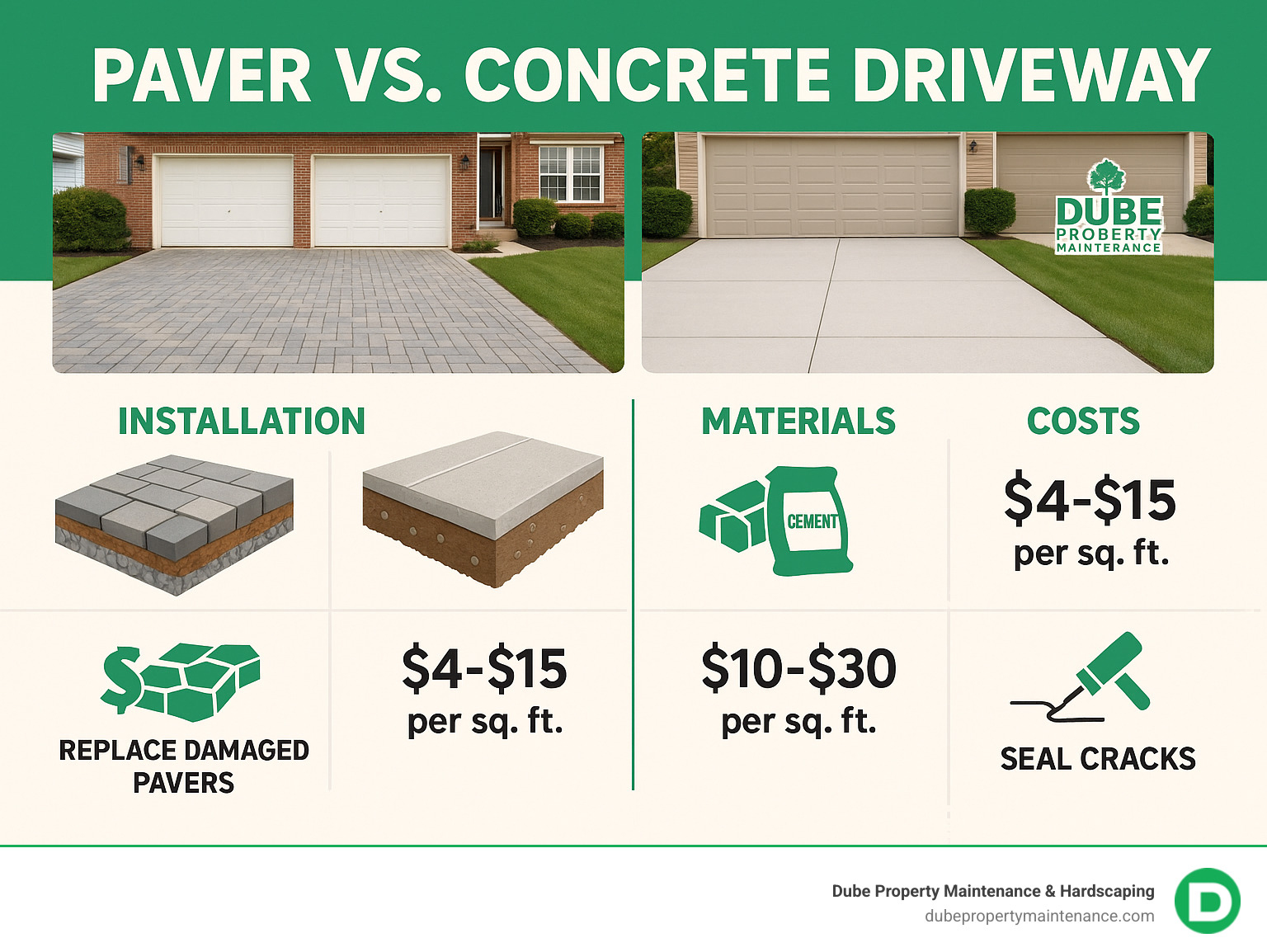
Assessing the Permeable paver driveway installation cost near me USA requires evaluating site demolition, earthwork volume, stone aggregate tonnages, surface materials, and specialized labor rates. Labor across the United States generally ranges from $5.00 to $15.00 per square foot, accounting for roughly 40% to 60% of total project costs due to deep excavation and multi-layer aggregate placement.
       TYPICAL INSTALLED COST RANGES PER SQUARE FOOT (USA)

  Plastic Grid / Cellular Pavers
  [Materials $2-$5] + [Base & Labor $3-$7]    --->  $5 - $12 / sq. ft. Total

  Permeable Concrete Pavers (PICP)
  [Materials $5-$12] + [Base & Labor $10-$15] --->  $15 - $25 / sq. ft. Total

  Natural Stone Permeable Paving
  [Materials $12-$25] + [Base & Labor $13-$25] ---> $25 - $50+ / sq. ft. Total
Sample Project Budget Model (600 sq. ft. Driveway, USA Average)
| Cost Category | Plastic Grid System | Permeable Concrete Pavers (PICP) | Natural Stone Permeable | Explanation & Optimization Notes |
| Demolition & Excavation | $900 – $1,800 | $1,200 – $2,400 | $1,500 – $3,000 | Includes concrete removal, soil excavation (8″–16″ deep), and dumping fees. |
| Aggregates & Geotextile | $700 – $1,200 | $1,200 – $2,200 | $1,500 – $2,800 | ASTM #2 base stone, #57 leveling stone, #8 joint chip, and filter fabric. |
| Edge Restraints / Curbs | $300 – $600 | $600 – $1,200 | $900 – $1,800 | Heavy-duty PVC spiked edging or poured concrete curb borders. |
| Surface Paving Materials | $1,200 – $2,400 | $3,000 – $6,000 | $7,200 – $15,000 | Primary surface grids, concrete pavers, or natural stone blocks. |
| Installation Labor | $1,800 – $3,000 | $3,000 – $6,600 | $4,500 – $9,000 | Equipment operation, base compaction, hand laying, and joint filling. |
| Estimated Total Installed | $4,900 – $9,000 | $9,000 – $18,400 | $15,600 – $31,600 | Averages range from ~$8–$15/sq.ft. (grids) to ~$15–$30/sq.ft. (PICP). |
Note: The figures listed above represent general national estimates. Actual pricing varies based on local aggregate availability, regional labor rates, soil conditions, and municipal permits.
Engineering Strategies, Tools, and Installation Support
Installing a long-lasting permeable driveway requires specialized civil engineering techniques and equipment to prevent base shifting and preserve infiltration capacity over time.
1. Open-Graded Aggregate Choking Strategy
-
Description: Laying progressively smaller sizes of washed crushed stone without fine dust (ASTM #2 base, topped by ASTM #57, topped by ASTM #8).
-
Advantages: Creates a strong structural base with 30% to 40% open void space for water storage while maintaining vehicle support.
-
Disadvantages: Open stone lacks fine sand binders, requiring careful edge containment during compaction.
2. Concrete Curb Edge Constraint Enclosure
-
Description: Pouring a continuous concrete curb band (6 inches wide by 12 inches deep) around the perimeter before laying surface pavers.
-
Advantages: Prevents lateral paver movement under heavy vehicular turning forces far better than standard plastic edge strips.
-
Disadvantages: Increases initial site preparation costs by $15 to $20 per linear foot.
           SUB-BASE STABILIZATION & EDGE INTEGRITY

     Standard Impervious Base           Permeable Open-Graded Base
   +---------------------------+     +---------------------------+
   | Surface Pavers & Sand     |     | Surface Pavers & Joint Chip|
   |---------------------------|     |---------------------------|
   | Compacted Dense Base (Crushed)| | ASTM #57 / #8 Choker Stone|
   |...........................|     |...........................|
   | Dense Soil (No Storage)   |     | ASTM #2 Reservoir Stone   |
   +---------------------------+     +---------------------------+
3. Non-Woven Geotextile Subgrade Separation
-
Description: Installing heavy non-woven geotextile fabric along the excavated soil trench to separate native earth from clean base stone.
-
Advantages: Prevents fine silt and clay from rising into the stone reservoir while allowing water to filter into the ground.
-
Disadvantages: Requires precise installation without tears; woven fabrics must be avoided as they clog easily under silt loads.
4. Perforated Subdrain Internal Distribution
-
Description: Placing perforated PVC pipes wrapped in aggregate within the lower reservoir base to capture excess water during severe storms.
-
Advantages: Protects low-permeability clay subgrades from over-saturation and prevents water from backing up onto surface levels.
-
Disadvantages: Requires connection to a legal discharge point, such as a storm sewer connection or daylight outlet.
Structural Risks, Environmental Factors, and Common Pitfalls
Permeable driveways operate differently than standard concrete or asphalt. Improper construction or maintenance mistakes can compromise infiltration rates or lead to surface ruts.
+------------------------------------------------------------------------+
|                     RISK & FAILURE MITIGATION TABLE                    |
+------------------------------------------------------------------------+
| ISSUE / FAILURE    | ROOT CAUSE               | PREVENTION & FIX       |
+--------------------+--------------------------+------------------------+
| Joint Clogging &   | Soil wash, leaf debris,  | Perform annual vacuum  |
| Water Pooling      | or sand introduced to    | sweeping or high-power |
|                    | open aggregate joints.   | pressure washing.      |
+--------------------+--------------------------+------------------------+
| Surface Rutting &  | Subgrade soil compacted  | Keep native soil       |
| Paver Settlement   | while wet or base stone  | uncompacted; compact   |
|                    | layers too thin.         | open stone in 4" lifts.|
+--------------------+--------------------------+------------------------+
| Base Contamination | Native clay mixing with  | Install non-woven      |
| & Loss of Storage  | clean aggregate due to   | geotextile fabric along|
|                    | missing geotextile.      | subgrade excavation.   |
+--------------------+--------------------------+------------------------+
| Lateral Edge       | Insufficient perimeter   | Install concrete curbs |
| Spreading          | restraint under turning  | spiked into the stone  |
|                    | vehicle tires.           | reservoir base.        |
+------------------------------------------------------------------------+
Maintenance Protocols & Long-Term Management
Preserving long-term infiltration capacity requires preventing fine sediment, dirt, and organic debris from clogging open aggregate joints.
                   PERMEABLE DRIVEWAY MAINTENANCE LIFECYCLE

  Installation    Year 1 - 2         Year 3 - 5         Year 6 - 8
  [Initial Set] -> [Debris Clean] --> [Vacuum Sweep] --> [Joint Replenishment]
       |                |                  |                  |
  Clean Joint      Remove Leaves       Professional      Top-Off ASTM #8
  Chip Infill      & Surface Dirt     Vacuum Extraction  Aggregate Chip
Recommended Maintenance Protocols
Seasonal Protocols (Spring / Fall):
-
Surface Clearing: Sweep away leaves, grass clippings, and pine needles using a stiff broom or leaf blower before organic matter breaks down into joint-clogging dirt.
-
Weed Management: Hand-pull weeds that germinate in surface detritus or spot-treat using non-staining organic weed controls.
-
Snow Removal: Use rubber-edged snowplow blades or snow blowers set slightly above surface height to prevent dislodging surface joint chips. Avoid applying sand for winter traction, as it rapidly clogs open joints.
Multi-Year Management (Every 2–4 Years):
-
High-Efficiency Vacuum Sweeping: Hire a specialized vacuum-sweeping truck or street sweeper to extract sediment from the top 1/2 inch of joint aggregate.
-
Joint Infill Replenishment: Sweep fresh, clean ASTM #8 or #89 aggregate chips into open joints to replace material extracted during vacuum cleaning.
-
Spot Elevation Adjustments: Lift small settled paver sections, add underlying choker stone, and reinstall pavers level with surrounding areas.
Project Documentation & Utility Reporting
Keeping accurate construction records helps homeowners protect manufacturer warranties, demonstrate compliance with municipal stormwater codes, and present proof of proper installation during future property sales.
                 PROJECT DOCUMENTATION DOSSIER

  +-------------------------------------------------------------+
  |  1. Civil Engineering Drawings & Excavation Cross-Sections  |
  |  2. Aggregate Delivery Invoices (ASTM #2, #57, & #8 Grades)  |
  |  3. Manufacturer Warranty Certificates (Pavers & Fabric)   |
  |  4. Municipal Stormwater Credit Approval Documents          |
  |  5. As-Built Photos showing Base Depths & Underdrains       |
  +-------------------------------------------------------------+
Illustrative Documentation Scenarios
Example 1: Municipal Stormwater Fee Credit Application
A property owner installs an 800 sq. ft. permeable interlocking concrete paver driveway to replace an old asphalt slab. They submit civil engineering site drawings, aggregate delivery receipts, and as-built excavation photos to their city water authority. The city verifies that the property captures 100% of a 10-year storm event and approves a 30% annual reduction in local utility stormwater fees.
Example 2: Resale Property Valuation Verification
During a home sale, a buyer’s inspector questions whether a gravel-filled plastic grid driveway will support heavy vehicle loads. The seller provides the original installation dossier, including manufacturer load-test certificates (demonstrating a 60,000 lbs/sq. ft. rating) and crushed stone base invoices. This documentation satisfies the buyer’s inspector and preserves property value.
Closing Summary
Evaluating the Permeable paver driveway installation cost near me USA involves balancing initial construction costs against long-term durability and stormwater management benefits. While permeable systems require higher initial capital ($8 to $25+ per square foot installed) than conventional asphalt or plain concrete, they eliminate the need for separate drainage pipes, resist freeze-thaw cracking, and offer lifespans of 30 to 50+ years when properly maintained. By focusing on deep aggregate base preparation, geotextile subgrade separation, concrete perimeter restraints, and routine joint cleaning, property owners can build an eco-friendly driveway that adds value to their home.
Frequently Asked Questions (FAQ)
What is the average cost per square foot for a permeable paver driveway in the USA?
Most residential permeable paver driveway projects cost between $8.00 and $25.00 per square foot installed. Plastic grid or cellular gravel systems range from $5 to $12 per square foot, permeable interlocking concrete pavers (PICP) range from $15 to $25 per square foot, and natural stone systems can exceed $25 to $50+ per square foot.
How long does a permeable paver driveway last compared to traditional concrete or asphalt?
A properly installed permeable interlocking concrete or natural stone paver driveway can last 30 to 50+ years. In contrast, traditional asphalt driveways typically require replacement after 15 to 20 years, and continuous concrete slabs often develop major expansion cracks within 20 to 25 years in freeze-thaw climates.
Can permeable pavers be installed over clay soil?
Yes, permeable pavers can be installed over clay soil, but the project requires a “partial exfiltration” or “no exfiltration” design. This involves digging a deeper crushed stone base reservoir (12 to 18 inches) and installing perforated PVC underdrain pipes at the bottom to safely route excess stormwater to an approved drainage outlet during heavy rainstorms.