Flagstone Patio vs Stamped Concrete Cost per Sq Ft USA
Flagstone Patio vs. Stamped Concrete Cost per Square Foot in the USA
Building an outdoor living area is one of the most effective ways to expand usable living space and enhance residential property value across the United States. When designing a new patio or courtyard, property owners frequently compare natural stone surfacing with decorative poured concrete. Both materials offer distinct aesthetic qualities, structural performance characteristics, and installation requirements that directly influence upfront capital investment and ongoing maintenance obligations.
Analyzing a Flagstone patio vs stamped concrete cost per square foot USA comparison requires examining raw material pricing, skilled masonry labor rates, sub-base excavation needs, and long-term durability under various climate conditions. While stamped concrete provides an economical way to replicate natural textures on a monolithic slab, flagstone offers authentic organic beauty with individual piece durability. This comprehensive guide breaks down cost factors, installation methods, practical design scenarios, and long-term care strategies to help homeowners and project managers make informed, value-driven decisions.
Overview of Flagstone Patio vs Stamped Concrete Cost per Square Foot USA
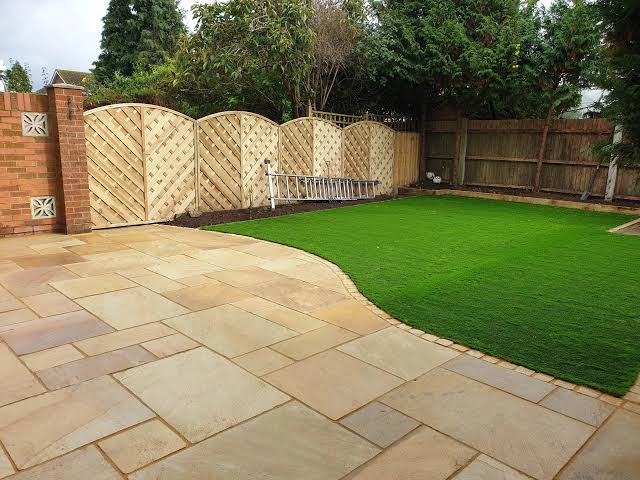
Understanding a Flagstone patio vs stamped concrete cost per square foot USA evaluation begins with recognizing the fundamental material and labor differences between natural stone masonry and poured concrete finishing. Flagstone consists of quarried sedimentary or metamorphic rock—such as bluestone, sandstone, limestone, or slate—quarried and split into flat slabs. Because each piece varies in shape, thickness, and color, installing flagstone demands intensive hand-sorting, custom chiseling, and precise bed setting by experienced masons.
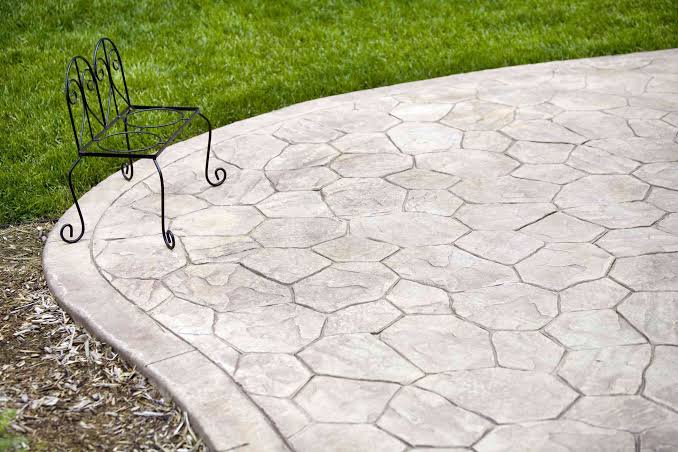
Conversely, stamped concrete is a monolithic slab poured from liquid concrete mixed with color pigments. While the concrete remains plastic, flexible polyurethane stamps are pressed into the surface to imprint patterns resembling slate, brick, wood, or natural fieldstone. The primary appeal of stamped concrete lies in its ability to cover large square footages quickly while mimicking expensive natural materials at a lower installed cost per square foot.
                AESTHETIC & STRUCTURAL COMPARISON MODEL

      [ Flagstone (Natural Stone) ]            [ Stamped Concrete (Poured Slab) ]
      +---------------------------+            +--------------------------------+
      | Quarried Slabs (Variable) |            | Continuous Concrete Mix        |
      | Hand-Set / Individual     |            | Surface Imprinted Pattern      |
      | Modular Joint Flexibility |            | Monolithic Structural Rigid    |
      | Higher Initial Capital    |            | Moderate Initial Capital       |
      | 30–50+ Year Lifespan      |            | 20–30 Year Lifespan            |
      +---------------------------+            +--------------------------------+
                    |                                          |
                    +--------------------+---------------------+
                                         |
                            [ Long-Term Cost Lifecycle ]
                          Initial Savings vs. Resealing
                           & Freeze-Thaw Repair Needs
Key Categories, Approaches, and Types
When evaluating Flagstone patio vs stamped concrete cost per square foot USA, both material pathways branch into distinct application methods and quality tiers that significantly affect overall project budgets.
| Category / Type | Description | Common Use Case | Time / Cost / Effort Level |
| Dry-Set Flagstone (Sand or Gravel Bed) | Natural stone pieces laid over a compacted crushed stone and sand base with gravel or polymer sand joints. | Rustic garden patios, pathways, and residential backyards with permeable surface needs. |
Cost: $15–$25 / sq. ft. Effort: Moderate labor; flexible joints reduce cracking risk. |
| Wet-Set Flagstone (Mortared Concrete Base) | Flagstone set in mortar over a poured concrete sub-slab with mortared joints. | Formal outdoor living rooms, heavy-traffic courtyards, and high-end residential estates. |
Cost: $22–$38 / sq. ft. Effort: High labor; requires concrete curing and skilled masonry. |
| Basic Stamped Concrete (1 Pattern / 1 Color) | Standard concrete mix with integral color or release agent, stamped with a single uniform pattern. | Budget-conscious suburban patios and basic dining pads. |
Cost: $8–$13 / sq. ft. Effort: Low-moderate labor; quick installation window. |
| Mid-Tier Stamped Concrete (Multi-Color / Border) | Dual-tone coloring (integral plus antiquing release) with distinct border patterns or accent bands. | Standard residential outdoor entertainment spaces and pool decks. |
Cost: $13–$19 / sq. ft. Effort: Moderate labor; precise timing required during pour. |
| Custom Premium Stamped Concrete | Hand-detailed scoring, multiple accent colors, custom chemical stains, and saw-cut joints. | Luxury residential patios seeking hyper-realistic natural stone or timber finishes. |
Cost: $19–$28 / sq. ft. Effort: High artistic labor; requires master concrete finishers. |
How to Choose Between Categories
Choosing between natural flagstone and stamped concrete depends primarily on total budget allocation, site access, local climate, and desired longevity. Property owners seeking maximum long-term durability in severe freeze-thaw zones often prefer dry-set flagstone because flexible sand joints absorb ground movement without cracking. Conversely, projects requiring rapid completion over broad square footages with a tight initial budget benefit most from basic or mid-tier stamped concrete.
Practical Scenarios or Thematic Applications
Scenario 1: Suburban Backyard Dining Patio (300 sq. ft., Moderate Climate)
-
Context: A flat residential backyard in a mild region requiring a low-maintenance dining area adjoining a rear sliding door.
-
Component List:
-
Compacted crushed aggregate sub-base (4 inches)
-
Standard 4-inch poured concrete slab with integral earth-tone pigment
-
Ashlar slate polyurethane stamp pattern with secondary antiquing release agent
-
Clear acrylic protective sealer coat
-
-
Relevance: Demonstrates how stamped concrete provides a high-end natural stone appearance at approximately half the upfront material and labor cost of true flagstone masonry.
Scenario 2: High-End Custom Flagstone Courtyard (400 sq. ft., Northern Freeze-Thaw Zone)
-
Context: A formal outdoor entertainment courtyard exposed to harsh winter freeze-thaw cycles and heavy snowfall.
-
Component List:
-
Excavated sub-grade with geotextile fabric and 6-inch compacted gravel base
-
1.5-inch to 2-inch thick bluestone or quartzite flagstone slabs
-
Polymeric joint sand vibrated into stone gaps to prevent weed growth and water pooling
-
Natural stone edge restraints held by concrete shoulders
-
-
Relevance: Highlights dry-set flagstone’s superior performance in cold climates, where ground heave causes rigid concrete slabs to crack over time.
Scenario 3: Swimming Pool Deck Surfacing (500 sq. ft., Sunbelt Region)
-
Context: An outdoor pool deck in a hot climate requiring a slip-resistant, heat-reflective walking surface.
-
Component List:
-
Light-colored Arizona sandstone or quartzite flagstone OR stamped concrete with texture mats and cool-tone stains
-
Slip-resistant grit additive mixed into sealer coats
-
Expansion joint foam installed against pool coping and perimeter coping walls
-
-
Relevance: Illustrates safety considerations such as heat retention and wet traction around water features, where stone choice or stamp texture directly impacts comfort.
                 SCENARIO REGIONAL PERFORMANCES

      Mild Climate (Suburban)          Freeze-Thaw / Northern Zone
      +------------------------+       +---------------------------+
      | Stamped Concrete Ideal |       | Dry-Set Flagstone Ideal   |
      | Low Cracking Risk      |       | Absorbs Ground Expansion  |
      | Cost-Effective Surface |       | No Surface Spalling       |
      +------------------------+       +---------------------------+
Comparison of Scenarios
Scenario 1 leverages the cost efficiency of stamped concrete for flat, mild-climate residential yards where structural cracking risks are low. Scenario 2 highlights flagstone’s structural superiority in northern climates where soil movement compromises continuous concrete slabs. Scenario 3 emphasizes surface performance characteristics—such as temperature and traction—where material selection is governed by poolside safety rather than base installation alone.
Planning, Cost, or Resource Considerations
Comprehensive financial planning requires accounting for site preparation, excavation, base materials, drainage grading, and finishing treatments alongside baseline material quotes. Across the United States, labor costs for specialized masonry range from $8.00 to $20.00 per square foot for stamped concrete finishing up to $15.00 to $30.00 per square foot for natural flagstone fitting.
       TYPICAL INSTALLED COST RANGE PER SQUARE FOOT (USA)

  Mid-Tier Stamped Concrete
  [Materials $3-$6] + [Labor $10-$13]  --->  $13 - $19 / sq. ft. Total

  Dry-Set Natural Flagstone
  [Materials $5-$10] + [Labor $10-$18] --->  $15 - $28 / sq. ft. Total

  Wet-Set Flagstone (Concrete Base)
  [Materials $8-$14] + [Labor $15-$24] --->  $23 - $38 / sq. ft. Total
Sample Project Budget Model (350 sq. ft. Patio, USA Average)
| Category | Mid-Tier Stamped Concrete | Dry-Set Natural Flagstone | Explanation & Optimization Tips |
| Site Excavation & Base | $700 – $1,200 | $900 – $1,500 | Includes 4–6 inches of excavation, geotextile membrane, and crushed stone base compaction. |
| Raw Materials | $1,050 – $1,750 | $1,750 – $3,150 | Ready-mix concrete vs. natural quarried stone slabs (priced per ton or pallet). |
| Coloring / Joints / Hardware | $350 – $700 | $300 – $600 | Stamping release agents & sealers vs. polymeric joint sand or mortar. |
| Installation Labor | $2,800 – $4,200 | $3,800 – $6,300 | Concrete finishing crew vs. skilled stone masons for hand-shaping stone. |
| Sealing / Initial Finish | $250 – $450 | $200 – $400 | Protective acrylic or penetrating breathable stone sealer. |
| Estimated Total Installed Cost | $5,150 – $8,300 | $6,950 – $11,950 | Figures are national averages (approx. $15–$24/sq.ft. for concrete vs. $20–$34/sq.ft. for stone). |
Strategies, Tools, or Support Options
Executing a successful patio installation requires specific engineering strategies and specialized tools tailored to the selected material.
1. Concrete Control Joint Placement Strategy
-
Description: Cutting planned expansion grooves into stamped concrete at predetermined intervals (typically every 8 to 10 feet) to control where cracking occurs.
-
Advantages: Prevents random aesthetic cracks across decorative stamped patterns; channels structural stress into straight hidden seams.
-
Disadvantages: Interrupts continuous stamped patterns; requires precise timing with a diamond saw after concrete sets.
2. Polymeric Joint Sand Stabilization
-
Description: Filling dry-set flagstone joints with a specialized blend of sand and polymer additives that harden when activated with water.
-
Advantages: Locks stone pieces in place, resists weed growth, prevents ant burrowing, and allows water movement without washing out.
-
Disadvantages: Higher material cost than standard sand; requires completely dry stone surfaces during initial installation to prevent staining.
       STAMPED CONCRETE CONTROL SEAMS vs. FLAGSTONE POLYMERIC JOINTS

     [ Stamped Concrete Slab ]              [ Dry-Set Flagstone ]
   +---------------------------+          +-----------------------+
   |   Pattern  |  Pattern     |          |  [Stone] Sand  [Stone]|
   |------------V--------------|          |  [Stone] Joint [Stone]|
   |       Control Joint       |          |  Flexible Polymeric   |
   +---------------------------+          +-----------------------+
3. Antiquing Release Agents & Secondary Staining
-
Description: Applying powdered or liquid release agents during stamping, followed by post-cure acid stains or water-based dyes.
-
Advantages: Creates realistic multi-tonal color depth that mimics authentic weathered natural stone.
-
Disadvantages: Requires skilled artistic application; improper washing before sealing can lead to sealer failure or peeling.
4. Wet-Saw Custom Stone Shaping
-
Description: Utilizing diamond-blade masonry saws or stonemason hammers to shape flagstone edges for tight, uniform joint lines.
-
Advantages: Enables elegant mosaic patterns with narrow, consistent joint gaps for an elevated architectural appearance.
-
Disadvantages: Substantially increases labor hours, noise, dust generation, and total project cost per square foot.
Safety, Risks, or Common Challenges
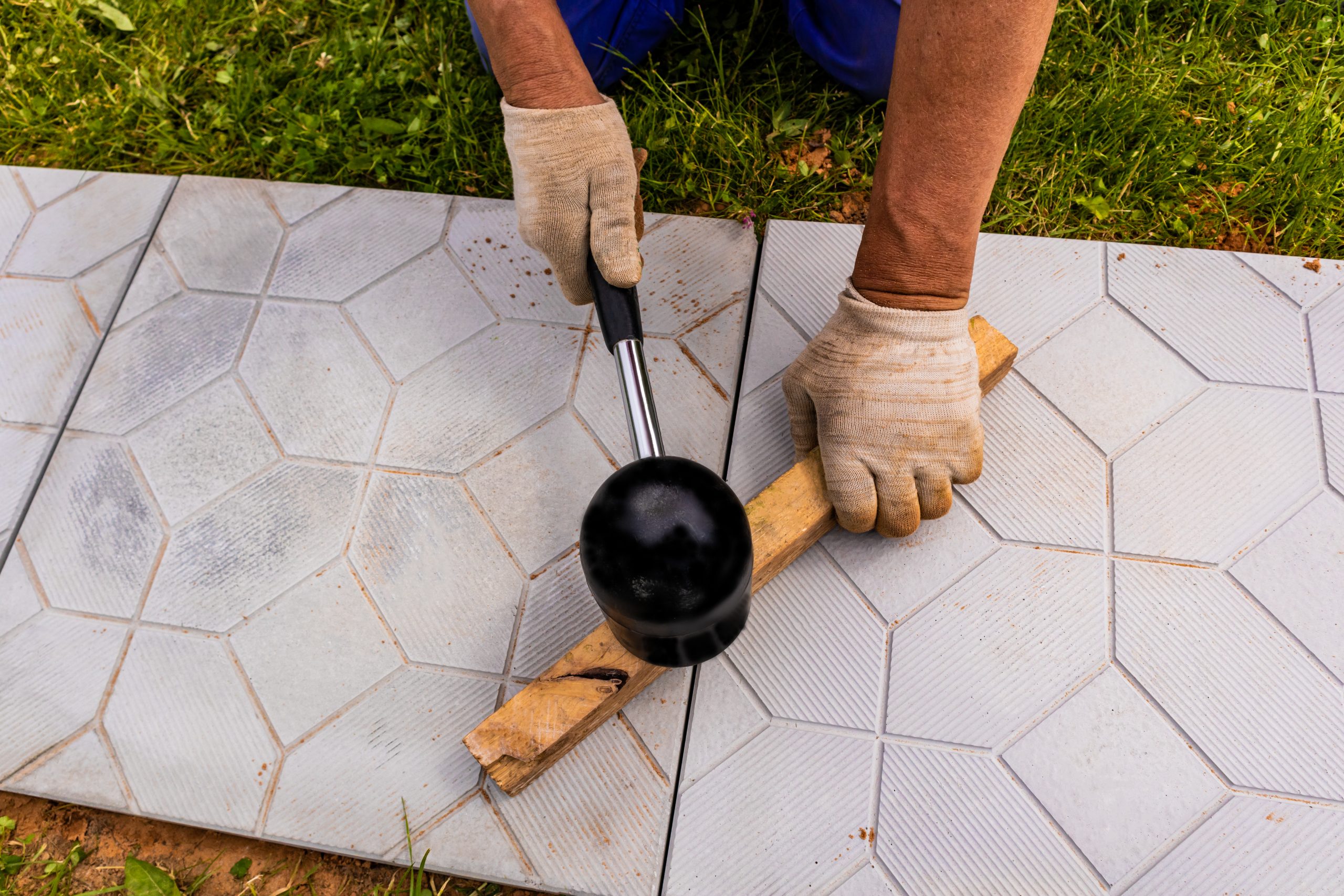
Both material paths present distinct environmental and structural risks that must be mitigated during planning and construction.
+------------------------------------------------------------------------+
|                   COMMON RISKS & MITIGATION MATRIX                     |
+------------------------------------------------------------------------+
| RISK ISSUE          | ROOT CAUSE              | MITIGATION STRATEGY    |
+---------------------+-------------------------+------------------------+
| Surface Spalling /  | Freeze-thaw expansion or| Reseal concrete every  |
| Flaking Concrete    | de-icing salt exposure  | 2-3 years; avoid salt  |
|                     | on stamped slabs. | chemical de-icers.   |
+---------------------+-------------------------+------------------------+
| Uncontrolled        | Soil settling or lack   | Install compacted base |
| Slab Cracking       | of control joints in    | with rebar/wire mesh   |
|                     | concrete slabs.    | reinforcement.        |
+---------------------+-------------------------+------------------------+
| Stone Tripping      | Uneven flagstone        | Hand-grade base sand;  |
| Hazards (Lipping)   | thicknesses or base     | select gauged/uniform  |
|                     | erosion in dry-sets.| stone slabs.     |
+---------------------+-------------------------+------------------------+
| Slippery Wet        | Smooth acrylic sealers  | Add anti-slip micronized|
| Surfaces            | on non-porous stamps | grit into final sealer |
|                     | or dense stones.   | topcoat during pour. |
+------------------------------------------------------------------------+
Maintenance, Best Practices, or Long-Term Management
A core consideration in a Flagstone patio vs stamped concrete cost per square foot USA comparison is the recurring cost and labor needed to maintain appearance and performance over time.
                    10-YEAR MAINTENANCE TIMELINE

  Stamped Concrete Slab:
  Year 1       Year 3       Year 5       Year 7       Year 9       Year 10
  [Initial]    [Reseal]     [Reseal]     [Reseal]     [Reseal]     [Touch-Up]
  (Requires ongoing cleaning, acrylic resealing, and crack filling)

  Dry-Set Natural Flagstone:
  Year 1       Year 3       Year 5       Year 7       Year 9       Year 10
  [Initial]    [Wash]       [Top-Off Sand][Wash]      [Top-Off Sand][Wash]
  (Requires periodic pressure washing and joint sand replenishment)
Ongoing Maintenance Protocol Checklist
For Stamped Concrete Patios:
-
Routine Cleaning (Quarterly): Sweep away organic debris and wash with mild detergent to prevent leaf staining or mold build-up.
-
Resealing Topcoat (Every 2–3 Years): Apply a fresh coat of solvent-based or water-based acrylic sealer to maintain color vibrancy and protect against water penetration.
-
Winter Protection: Avoid chemical de-icers containing ammonium nitrate or sodium chloride, which cause surface pitting and sealer delamination.
-
Crack Monitoring: Inspect expansion joints annually and apply color-matched polyurethane caulk to prevent water infiltration underneath the slab.
For Natural Flagstone Patios:
-
Joint Sand Replenishment (Every 3–5 Years): Sweep replacement polymeric sand into opened joints and activate with water to maintain structural stability.
-
Algae & Moss Management: Clean shaded or damp stone sections with diluted bleach or specialized stone cleaners to preserve slip resistance.
-
Individual Stone Resetting: If a stone settles or rocks, lift the individual piece, add base sand, compact, and reset without disturbing surrounding stones.
Documentation, Reporting, or Tracking Outcomes
Maintaining thorough project records protects warranties, assists during property appraisals, and simplifies ongoing upkeep for future homeowners.
                   PROJECT DOCUMENTATION DOSSIER

  +---------------------------------------------------------------+
  |  1. Material Invoices & Quarry/Mix Specifications             |
  |  2. Contractor Agreements & Sub-Base Depth Logs               |
  |  3. Color Formula Names & Stamp Pattern ID Codes             |
  |  4. Sealer Type & Recommended Maintenance Schedule            |
  |  5. As-Built Drainage & Utility Line Maps                      |
  +---------------------------------------------------------------+
Practical Documentation Examples
Example 1: Stamped Concrete Color Archive
A homeowner installs a mid-tier stamped concrete patio using an Ashlar slate pattern with “Charcoal” integral color and “Walnut” liquid release agent. They record the exact brand, color code, and sealer type in a digital home folder. Five years later, when adding an adjoining walkway, the contractor uses these precise color codes to match the existing patio finish seamlessly.
Example 2: Flagstone Warranty & Source Tracking
A developer builds a commercial outdoor restaurant terrace using 500 square feet of Pennsylvania Bluestone. They retain the quarry invoice specifying stone grade, thickness, and supplier details. When expanding the dining terrace three years later, the project management team orders matching stone directly from the same quarry vein, ensuring color and texture continuity.
Closing Summary
Evaluating a Flagstone patio vs stamped concrete cost per square foot USA comparison involves balancing upfront costs against long-term maintenance preferences and climate demands. Stamped concrete delivers an economical, highly customizable solution averaging $8 to $19 per square foot installed, making it ideal for large, budget-conscious patio installations in mild climates. Natural flagstone requires a higher initial investment of $15 to $35+ per square foot installed, but repays homeowners with authentic beauty, individual piece repairability, and exceptional resistance to freeze-thaw ground movement over decades of use.
Frequently Asked Questions (FAQ)
How much cheaper is stamped concrete than natural flagstone per square foot in the USA?
On average, stamped concrete costs $8 to $19 per square foot installed, whereas natural flagstone ranges from $15 to $35+ per square foot installed depending on stone type and dry-set versus wet-set installation methods. This makes stamped concrete approximately 30% to 50% less expensive upfront.
Which option lasts longer, flagstone or stamped concrete?
Natural flagstone can last 30 to 50+ years with minimal structural degradation because individual stones do not crack from ground movement when installed dry-set. Stamped concrete typically lasts 20 to 30 years; however, it is susceptible to surface cracking over time and requires periodic resealing every 2 to 3 years to maintain color and prevent freeze-thaw damage.
Can stamped concrete be repaired if it cracks?
Minor surface cracks in stamped concrete can be filled with color-matched rigid caulking or concrete patch compounds. However, matching the exact color dye and texture pattern of aged stamped concrete is difficult, making structural repairs far more visible than simply lifting and replacing a damaged individual piece of natural flagstone.